
(Prefer videos? Watch a brief summary of this article below.)
A truck is on site. The cargo is expected. The dock is almost free.
And still, nothing moves.
The driver waits. The dispatcher calls. Someone walks across the yard to “check quickly.” Ten minutes become thirty. Another vehicle arrives. Then another. What looked like a small delay turns into a queue, a missed slot, and a warehouse team that is suddenly working against the clock.
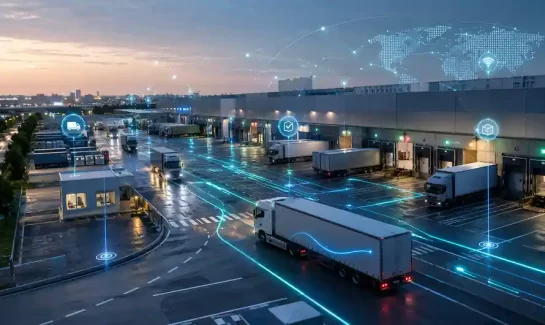
This is where many logistics operations still lose time: not in the warehouse, not on the road, but in the space between them. Yard monitoring systems bring this space into view. They show where vehicles are, how trailers move, which docks are blocked, and where congestion starts before it becomes expensive.
Key Takeaways
- Yard visibility matters because the yard is often the missing link between transport planning and warehouse execution.
- Real-time monitoring reduces guesswork by showing live activity for vehicles, trailers, gates, and docks.
- A yard visibility system enables faster decision-making when traffic volume rises or disruptions appear.
- Technologies work best together because cameras, RFID, GPS, telematics, and IoT sensors each reveal different parts of the operation.
- Monitoring is not the same as control. Complex sites often need a broader yard management system to coordinate workflows.
- Better logistics yard monitoring improves efficiency, security, and supply chain visibility without necessarily expanding the physical site.
Why Visibility Is a Challenge in Logistics Yards
Inside the warehouse, everything is measured. Inventory. Picking. Packing. Loading. Labor.
Outside, the picture is often blurrier.
Limited real-time insight into yard activity
Yards do not stand still. They change by the minute.
Trucks arrive ahead of schedule. Others miss their slot. Drivers need instructions. Security teams need verification. Warehouse teams need dock information. Transport planners want status updates.
Without yard-monitoring logistics tools, this information often travels through phone calls, emails, radio messages, and spreadsheets. It works, until it does not. The moment volumes rise, the manual model begins to crack.
Difficulty tracking trailers and vehicles
Trailer tracking sounds simple until a site handles 200, 300, or 500 movements per day.
Where is trailer 84? Has the refrigerated unit been checked? Which empty trailer is ready for outbound loading? Has the carrier already left, or is the vehicle still waiting near the gate?
A few unanswered questions can slow the whole process. People search. Drivers wait. Yard trucks make unnecessary moves. The operation stays busy, but not always productive.
The impact of poor monitoring on operations
Poor visibility rarely results in a single dramatic failure. It creates dozens of small losses.
A dock sits empty because the next vehicle has not been called. A high-priority load waits behind lower-priority traffic. A trailer is available, but nobody knows where it is. A security check takes longer because vehicle data was entered manually.
What Are Yard Monitoring Systems?
Yard monitoring is not just “putting cameras outside.” That is too narrow.
A modern yard monitoring solution connects physical activity with operational data. It turns the yard from an unclear outdoor area into a readable process environment.
Definition in the logistics context
Yard monitoring systems are digital solutions that track and visualize what happens across logistics yards.
They can show vehicle arrivals, trailer locations, gate events, parking occupancy, dock status, waiting times, and asset movements. In other words, they create a live operational layer between transportation and warehouse execution.
For busy facilities, this becomes the difference between “someone should know” and “we know right now.”
Difference between monitoring and management
Monitoring shows what is happening.
Management helps decide what happens next.
A yard visibility system may show that eight vehicles are waiting near the gate. A yard management system can prioritize them, assign docks, guide drivers, update workflows, and document the process.
Both are valuable. They only solve different levels of the problem.
What Needs to Be Monitored in a Yard
A yard is a process zone with assets, rules, traffic, people, equipment, and risk.
To make logistics yard monitoring useful, several areas must be visible simultaneously.
Vehicle and trailer movements
Every movement matters: arrival, check-in, parking, relocation, docking, unloading, loading, and exit.
When these steps are monitored, teams can identify where time is lost. They can also separate normal waiting from avoidable delay. That distinction is important. Not every truck waiting is a problem. But a truck waiting in the wrong place, without status, usually is.
Yard occupancy and space usage
Many logistics sites think they have a space problem. Sometimes they do. Often, however, the issue is space behavior.
One zone is overcrowded. Another is underused. Empty trailers occupy premium positions. Vehicles block turning areas. Temporary parking becomes permanent by accident.
Warehouse yard monitoring helps operations teams see how space is actually used during the day, not just how it appears on a site plan.
Gate activity and entry points
The gate is where the yard story begins.
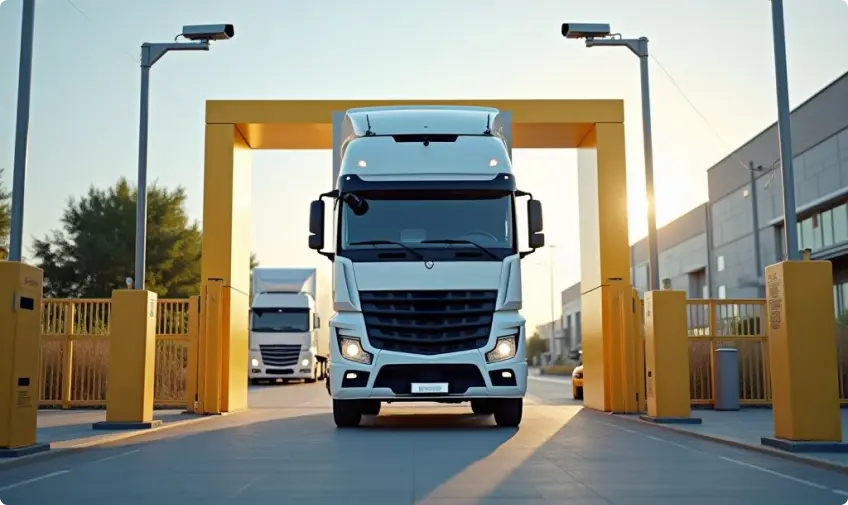
If gate activity is slow, unclear, or paper-based, every subsequent process inherits the delay. Digital gate solutions can capture arrival times, driver information, vehicle data, appointment status, and access permissions more reliably.
friendlyway’s gate management solution helps logistics facilities automate truck check-in, reduce manual work, and create cleaner entry data from the first touchpoint.
Dock status and operations
The dock is the pressure point.
A dock may be technically available but not ready. It may be blocked by a trailer that should have been moved twenty minutes ago.
Monitoring dock status gives teams a more accurate view of what can happen next. This improves scheduling, reduces idle time, and helps warehouse staff prepare for incoming vehicles.
Technologies Used in Yard Monitoring Systems
No single technology can explain the whole yard. Cameras see one thing. Sensors detect another. GPS gives the location. RFID confirms identity.
The strongest yard-tracking systems combine several data sources into one view.
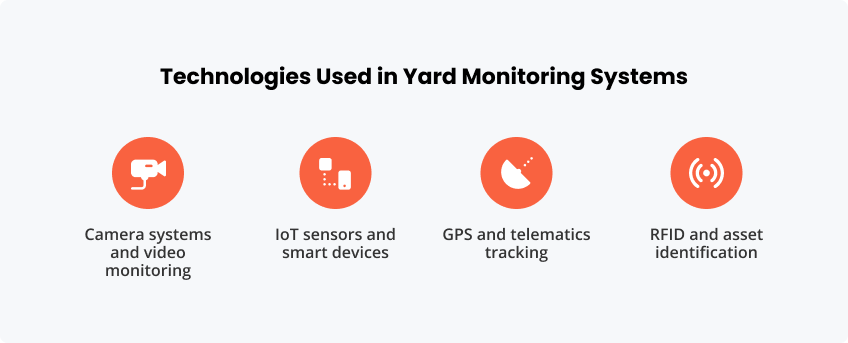
Camera systems and video monitoring
Video monitoring yard solutions provide visual confirmation.
They help teams observe queues, access points, parking zones, blocked lanes, and security-sensitive areas. Advanced camera setups may support license plate recognition or automatic event detection.
Still, cameras have limits. A camera can show that a truck is waiting. It may not show appointment priority, load status, or the reason for the delay.
IoT sensors and smart devices
IoT logistics devices collect small but valuable signals across the site.
A sensor can detect whether a parking space is occupied. A barrier can report opening and closing events. A dock sensor can show whether an area is in use. Over time, these signals create a much richer picture of yard activity.
This is especially useful because it reduces dependence on manual updates.
GPS and telematics tracking
GPS tracking logistics tools extend visibility beyond the gate.
They help teams understand when trucks will arrive, whether routes have changed, and how vehicles move on larger premises. For carriers and 3PL operations, this can improve appointment planning and reduce surprises.
A late truck is still a problem. But a late truck known early is a manageable problem.
RFID and asset identification
RFID tracking is particularly useful for trailer tracking and asset identification.
Instead of walking the yard or calling multiple people, teams can automatically identify trailers. This reduces search time and helps prevent assets from disappearing into the operational fog.
How Yard Monitoring Works in Practice
The practical value appears when data stops living in separate places.
A camera feed here, a gate list there. A spreadsheet on someone’s desktop. A radio message that nobody documented. That is not visibility. That is noise.
Collecting data from multiple sources
A yard monitoring solution may collect information from cameras, RFID readers, GPS devices, IoT sensors, gate terminals, dock systems, and access control tools.
Together, these sources create a connected view: a truck checks in, the vehicle is identified, the appointment is matched, the yard position is visible, and the dock status is updated.
One event feeds the next.
Real-time tracking and alerts
Real-time monitoring is valuable because yards move quickly.
If a vehicle exceeds its planned waiting time, the system can flag it. If an unauthorized vehicle enters a restricted zone, security can react. If the dock turnaround time exceeds expectations, supervisors can investigate before the schedule collapses.
The point is not to collect more data. The point is to act earlier.
Visualizing yard activity
People need clarity, not another complicated screen.
Dashboards, yard maps, timelines, and status views help operators understand what is happening fast. A good interface shows patterns: where trucks wait, which docks are under pressure, where capacity is still available, and which process step needs attention.
The Difference Between Monitoring and Control
There is a moment in many digital yard projects when visibility alone is no longer enough.
At first, seeing the yard feels like a breakthrough. Then teams begin asking the next question: now that we see it, how do we change it?
Passive visibility vs active management
Passive visibility observes. Active management intervenes.
A monitoring system may show ten vehicles waiting. A management system can assign priorities, update dock plans, send instructions, and trigger the next workflow step.
That is the difference between a weather report and air traffic control.
When monitoring is not enough
Monitoring may be enough for smaller sites with moderate traffic. It gives transparency and reduces confusion.
But high-volume operations usually need more. A manufacturing plant with strict production schedules, a distribution center with peak-hour surges, or a 3PL hub serving multiple customers cannot rely on visibility alone.
They need logistics yard control.
Modern logistics facilities need more than cameras. Discover how friendlyway helps automate vehicle processing and improve yard transparency.
How Monitoring Systems Support Yard Operations
Once teams trust the data, behavior changes.
People stop walking outside “just to check.” Dispatchers stop calling three colleagues for one trailer location. Supervisors stop making decisions based on yesterday’s report.
Improving decision-making
Better data changes the rhythm of the operation.
Managers can allocate staff where delays are building. Dispatchers can prioritize urgent vehicles. Warehouse teams can prepare the docks earlier. Security teams can verify site activity without slowing down every movement.
The decisions are not necessarily bigger. They are faster and better timed.
Reducing delays and congestion
Congestion often begins quietly.
One driver waits in the wrong area. One dock takes longer than planned. One trailer is not moved. Another vehicle arrives. Suddenly, the yard feels full.
Logistics yard monitoring helps detect these signals before they turn into visible chaos.
Supporting security and compliance
A yard is also a controlled access environment.
Monitoring systems help document who entered, when they arrived, where they moved, and when they left. For facilities handling high-value goods, regulated materials, or critical supply chain processes, this traceability matters.
It supports security teams and provides useful records for later questions.
The Role of Yard Management Systems
Monitoring creates awareness. Yard management turns awareness into coordinated action.
That is why many companies start with visibility and gradually move toward broader digital operations across the yard.
Combining monitoring with operational control
A yard management system can combine check-in, scheduling, dock assignment, yard movement, driver communication, access workflows, and reporting.
In practice, this means fewer disconnected handovers. The gate knows what the dock expects. The dispatcher sees what security has processed. The warehouse team understands what is coming next.
Centralizing data across yard processes
Centralization sounds boring. In logistics, it is powerful.
When everyone works from the same data, fewer things fall through the cracks. Security, warehouse, transport, and management teams stop maintaining separate versions of reality.
The yard becomes less reactive. More predictable. Easier to scale.
Connect monitoring, access control, and logistics workflows through a single digital platform.
Where Yard Monitoring Systems Are Most Valuable
Not every yard needs the same level of technology. A small site with low traffic may only need basic visibility.
But some environments feel the benefits quickly.
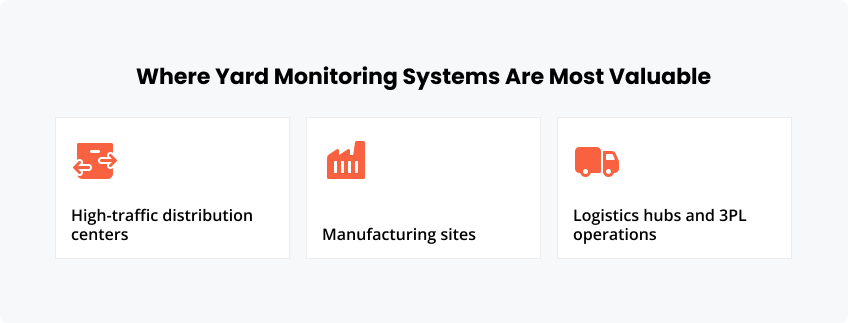
High-traffic distribution centers
Distribution centers are built for speed. During peak hours, even small delays can affect dozens of shipments.
A yard monitoring solution helps these sites manage arrivals, departures, dock usage, and trailer positions with greater precision.
Manufacturing sites
Manufacturing does not like surprises.
If raw materials arrive late, production may suffer. If finished goods cannot leave on time, storage areas fill up. Monitoring gives manufacturing teams an earlier warning when inbound or outbound flows begin to drift.
Logistics hubs and 3PL operations
3PL providers manage complexity for a living.
Different customers. Different carriers. Different service levels. Different priorities.
For these operations, yard visibility is not just an internal efficiency tool. It is part of service quality.
Common Mistakes in Yard Monitoring
Yard digitization can fail quietly when companies solve the visible problem but miss the operational one.
A camera is installed. A dashboard is launched. Data is collected.
And still, the yard feels messy.
Relying only on cameras
Cameras are useful, but they are not a strategy.
They show images. They do not automatically explain process status, shipment priority, appointment accuracy, or dock readiness. For real operational value, video should be combined with structured data.
Lack of integration with other systems
A yard does not operate alone.
It connects to warehouse systems, transportation planning, access control, appointment scheduling, and sometimes ERP platforms. If yard monitoring remains isolated, teams still have to bridge the gaps manually.
That weakens the value of the investment.
No real-time data usage
Some companies collect data mainly for reporting. That helps later, but not during the problem.
The bigger value comes when real-time data changes live decisions: rerouting vehicles, adjusting dock plans, calling drivers, prioritizing urgent loads, or opening additional gate capacity.
Yard monitoring systems have become much more than tracking tools. They close the visibility gap between the road and the warehouse. They help logistics teams understand movement, reduce waiting, locate assets, strengthen security, and respond before pressure turns into disruption.
For many facilities, that is the first practical step toward a digital yard that is not only visible but controllable.
FAQ
A yard monitoring system is a digital solution that provides real-time visibility into vehicle movements, trailer locations, gate activity, dock status, and yard operations.
Monitoring shows what is happening in the yard. Yard management adds operational control, including scheduling, dock assignment, workflow automation, driver communication, and reporting.
Common technologies include cameras, IoT sensors, RFID tracking, GPS tracking tools, telematics, license plate recognition, and digital gate systems.
They reduce blind spots, improve yard visibility, shorten wait times, support faster decisions, strengthen security, and improve supply chain visibility.
Not always. A standalone monitoring solution can significantly improve visibility. However, companies that require full control of the logistics yard usually benefit from a comprehensive yard management system.