
(Prefer videos? Watch a brief summary of this article below.)
A company can lose an hour in a place that never appears on a customer invoice. Not in the office. Not in the warehouse aisle. Outside. At the gate. By the dock. Beside a row of waiting trailers. One team says the goods are ready. Another says the truck has arrived. Yet nothing moves. This is where YMS vs WMS becomes a real business question, not a software comparison.
Key Facts at a Glance
- A WMS keeps goods organized inside the building, helping teams know what is in stock and where it sits.
- A YMS keeps trucks, trailers, gates, and docks moving outside the building, helping teams know who has arrived and what should happen next.
- Both support better supply chain visibility. Together, these logistics management systems reduce waiting, confusion, and wasted effort.
What Is Yard Management?
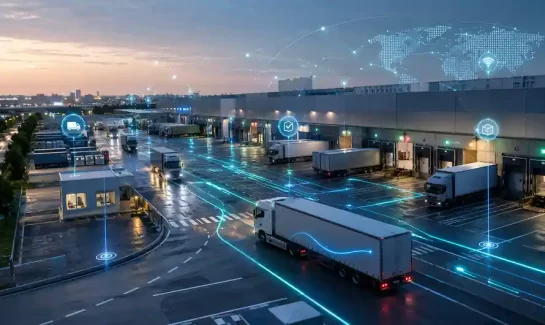
Yard management is about the space just outside the warehouse. It is the place many companies overlook until it starts costing money.
Definition of yard operations in logistics
Yard operations cover the events that occur when vehicles enter, wait, move, load, unload, and leave. This includes driver check-in, parking instructions, trailer tracking, dock use, and exit confirmation.
A yard management system helps turn this busy area into a clear step-by-step process.
The role of the yard between transportation and warehousing
The yard is the handover point. It connects the road with the building. It connects the driver with the warehouse team. It connects the plan with the physical world.
When this handover is weak, people start searching, calling, waiting, and guessing.
Typical processes in yard management
A simple yard flow might look like this:
- A carrier books a time.
- The driver arrives.
- The gate confirms the visit.
- The vehicle is sent to a waiting area.
- A dock is assigned.
- Loading or unloading happens.
- The vehicle leaves.
Good yard management makes this feel ordinary. That is the point.
What Is Warehouse Management?
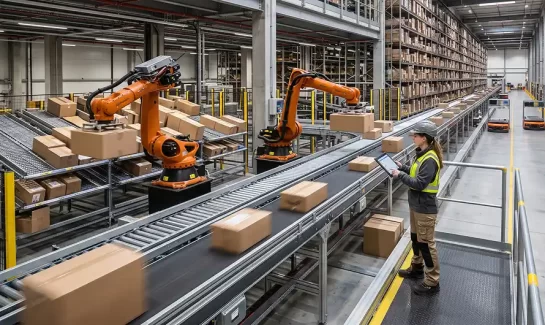
Warehouse management begins once goods are inside the warehouse. Here, the work is quieter but intense. Every box, pallet, shelf, order, and scan matters.
Definition of warehouse operations
Warehouse operations include receiving goods, storing them, picking them, packing them, and preparing them to leave. It is the art of keeping promises with space, people, and timing in mind.
Core processes inside the warehouse
Inside the building, teams answer practical questions all day:
- What arrived?
- Where should it go?
- Is it available?
- Who needs it next?
- Can it leave today?
Without clear answers, speed disappears.
The role of a warehouse management system (WMS)
A warehouse management system keeps internal processes under control. It tells teams where goods are, what task comes next, and whether the record matches reality.
Yard Management System vs Warehouse Management System
YMS and WMS often meet each other at the dock. That does not mean they do the same job.
Purpose and operational focus
A YMS manages movement outside the building. A WMS manages goods inside the building.
One follows vehicles. The other follows products.
Visibility and tracking capabilities
A YMS gives yard visibility. It shows which truck arrived, where a trailer is, how long someone has waited, and which dock is ready.
A WMS shows product locations, stock levels, order statuses, and warehouse progress.
Both views matter. Alone, each view is unfinished.
Dock scheduling and transportation coordination
Dock scheduling software helps prevent the classic morning problem: too many vehicles arriving at once. It also helps avoid the opposite problem: workers ready, dock empty, no truck in sight.
Better carrier scheduling creates a calmer site.
Data management and reporting
A YMS can show waiting time, arrival patterns, dock use, gate delays, and trailer status. A WMS can show stock accuracy, picking speed, order timing, and shipping progress.
Together, they reveal where the day actually slows down.
Key Differences Between Yard and Warehouse Management
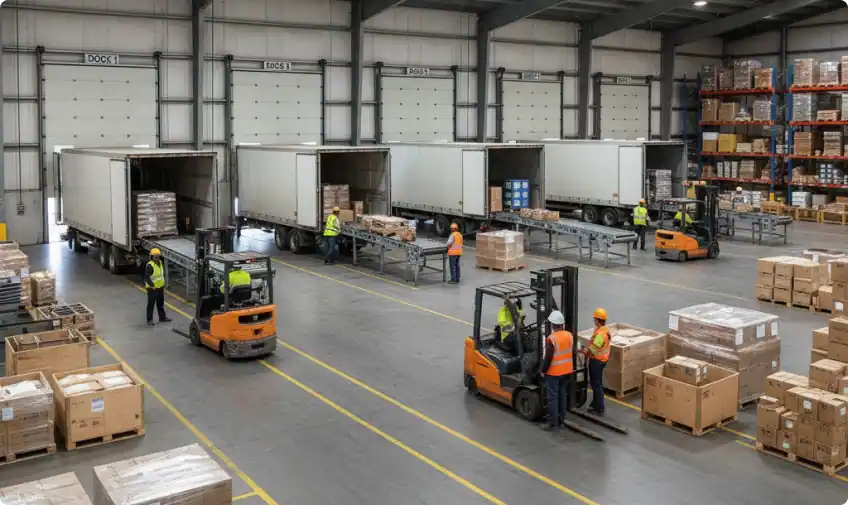
The easiest difference is location. The bigger difference is what each team is trying to control.
Operational scope
Warehouse management starts when goods enter the building.
Yard management starts earlier — sometimes, before the driver reaches the gate. It ends only when the vehicle leaves.
Types of assets managed
A WMS manages goods, shelves, pallets, orders, and warehouse work. A YMS manages trucks, trailers, drivers, gates, waiting areas, and docks.
That is why replacing one with the other rarely works well.
Technologies and software used
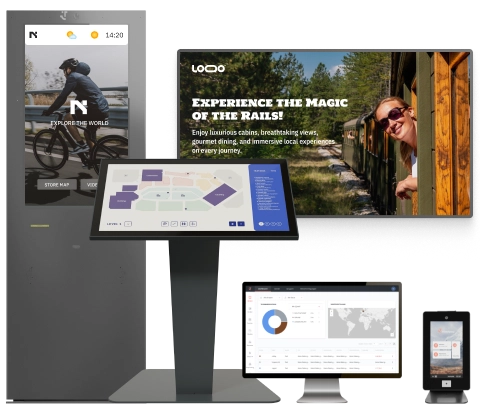
Warehouse logistics systems often rely on scanners, labels, mobile devices, and stock rules. YMS tools may include self-service screens, gate systems, mobile messages, digital signs, cameras, and automatic alerts.
Through integrations, companies can connect these touchpoints into a smoother arrival and departure experience.
Impact on supply chain efficiency
A WMS helps the building run better. A YMS helps the area around the building avoid becoming a blind spot.
When connected, they support logistics process optimization across the full site, from arrival to dispatch.
How YMS and WMS Work Together
The dock is the meeting point. If the systems do not speak, the people must compensate.
Dock door coordination
A WMS may show that goods are ready to leave. A YMS may show that the assigned trailer has not arrived, or that another trailer is already waiting.
With shared information, dock door management becomes less reactive.
Trailer and inventory visibility
Picture a retail warehouse before a major promotion. The goods are packed. The store’s deadline is approaching. The trailer is on site, but parked in the wrong row.
The warehouse did its job. The yard is where the delay hides.
Synchronizing yard and warehouse operations
When YMS and WMS work together, teams see more than their own part.
The warehouse can prepare for real arrivals. The yard can avoid sending vehicles to docks that are not ready.
Improving end-to-end logistics flow
A connected flow is plain and powerful:
- Book the visit.
- Confirm arrival.
- Send the driver to the right place.
- Prepare the dock.
- Move the goods.
- Update the record.
- Release the vehicle.
Less noise. Fewer surprises.
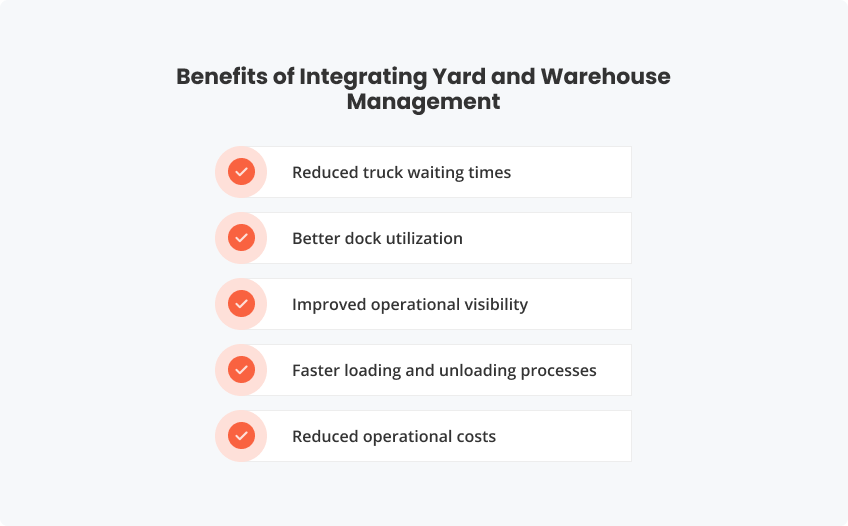
Benefits of Integrating Yard and Warehouse Management
Integration does not make a busy site quiet. It makes it understandable.
Reduced truck waiting times
Drivers often wait because nobody has the full picture. A connected YMS and WMS can reduce that gap between “arrived” and “ready to act.”
Better dock utilization
Docks are small spaces with large consequences. When arrival information aligns with warehouse readiness, teams use each dock with more purpose.
Improved operational visibility
Supply chain visibility should not vanish at the fence. Managers need to see what is arriving, waiting, loading, finished, delayed, or ready to leave.
Faster loading and unloading processes
When the next vehicle is known early, teams prepare earlier. Space clears. Equipment moves. Documents are ready. People stop rushing at the last second.
Reduced operational costs
Better coordination can reduce waiting charges, overtime, repeated calls, lost time, and avoidable mistakes. The gains are not always dramatic. They are steady.
Improve trailer visibility, reduce dwell time, and coordinate dock activity with a digital yard management system built for real logistics sites.
When Businesses Need Both YMS and WMS
Some sites can manage with a WMS alone. Others reach a point where the outside area starts shaping the whole day.
High-volume distribution centers
High-volume distribution center management needs clear movement inside and outside. When many vehicles use the same docks, memory and spreadsheets become weak tools.
Manufacturing facilities
A factory depends on timing. If materials wait outside, the line may slow. If finished goods block the yard, the next delivery may struggle to enter.
Retail and e-commerce warehouses
Retail and e-commerce sites live with peaks. Promotions, returns, urgent store orders, and daily cut-offs put pressure on both warehouse operations and yard operations.
Third-party logistics providers (3PL)
3PL companies serve many customers at once. They need clean stock control inside and reliable vehicle flow outside. One without the other creates service risk.
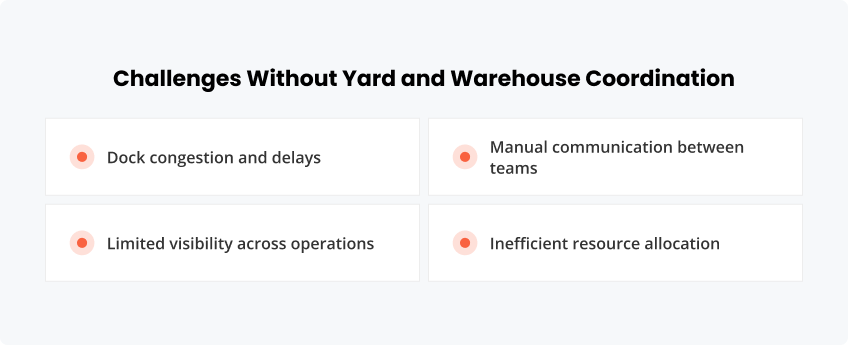
Challenges Without Yard and Warehouse Coordination
The warning signs are usually simple. People ask the same questions too often.
Dock congestion and delays
Where is the driver? Which trailer is next? Why is that dock empty?
When these questions repeat, the site is losing time in small pieces.
Limited visibility across operations
Security sees the gate. Warehouse teams see the goods. Transport teams see the plan.
Without shared information, everyone sees only one slice.
Manual communication between teams
Calls, radios, paper notes, and spreadsheets may work on quiet days. Busy days expose them quickly.
One missed message can send a driver to the wrong place.
Inefficient resource allocation
Poor coordination wastes the most valuable things first.
People wait. Vehicles idle. Docks sit unused. Managers chase updates instead of improving the process.
Choosing the Right System for Your Logistics Operations
The right choice starts with a simple question: where does the work lose control?
When a WMS alone is enough
A WMS may be enough if vehicle traffic is low, docks are simple, and arrivals are predictable. In that case, improving inside work may bring the best return.
When a YMS becomes necessary
A YMS becomes necessary when the outside area becomes too busy to manage by habit. Signs include long waits, lost trailers, missed time slots, unclear driver status, and constant manual updates.
Integration considerations
Look for systems that can share information with WMS, transport tools, access systems, screens, cameras, scales, and gate equipment.
For sites with frequent visitors, contractors, and drivers, digital check-in can also make arrival safer and more predictable.
Scalability for growing logistics networks
A process that works for one site may fail across ten. Growing companies need workflows that handle more languages, more carriers, more rules, and more locations without adding confusion.
Build a smoother arrival-to-departure experience with digital check-in, integrations, signage, and yard control from friendlyway.
YMS vs WMS is not a contest. It is a map. The warehouse needs accuracy. The yard needs visibility. The dock needs both. When both systems work together, teams stop relying on memory, repeated calls, and luck. The site becomes easier to manage, measure, and improve.
FAQ
A YMS manages yard operations, including trucks, trailers, gates, docks, drivers, and carrier scheduling. A WMS manages warehouse operations, including stock, storage, picking, packing, receiving, and shipping.
Usually not. A WMS may handle some warehouse scheduling, but it typically does not provide full yard visibility, trailer tracking, gate control, or dock scheduling.
Not always. Small warehouses with few vehicles and simple docks may not need a dedicated yard management system. It becomes useful when waiting, confusion, or manual communication start to hurt performance.
They can share arrival times, carrier updates, dock assignments, loading status, and departure confirmations with transportation systems.
Manufacturing, retail, e-commerce, food and beverage, pharmaceuticals, automotive, distribution centers, and 3PL companies benefit most. They rely on timing, clear handovers, and strong supply chain visibility.