
(Prefer videos? Watch a brief summary of this article below.)
A container yard rarely fails all at once. It slows down one missed handoff at a time. A truck waits at the gate. A container sits in the wrong slot. A crane is ready, but the box is not. Soon, the whole space feels heavier than it should. That is why container yard management has become a priority for ports, depots, rail terminals, and freight hubs across Europe and globally.
Key Facts at a Glance
- Container yard management directly affects gate speed, yard throughput, and customer service.
- A yard management system gives teams real-time visibility and better control over container flow.
- Gate check-in automation improves carrier coordination and shortens queues.
- Better planning lowers container dwell time and reduces demurrage and detention costs.
- Cloud-based platforms make YMS for container yard operations easier to deploy across multiple sites.
What Is Container Yard Management?
Container yards are far more than storage zones. They are active logistics control points where timing, space, and coordination decide whether cargo moves smoothly or stalls.
The role of container yards in port and intermodal logistics
These spaces connect vessels, trucks, and trains. They absorb volume peaks, organize boxes by priority, and support fast handoffs between transport modes.
In practice, this means keeping import, export, empty, and special containers available at the right moment. In ports such as Rotterdam or Hamburg, that level of precision is not a luxury. It is essential.
How container yards impact supply chain performance
When the yard runs well, the wider supply chain feels stable. When it does not, delays spread quickly.
A misplaced container can hold up a truck. A congested stack can trigger extra rehandles. A late release can disrupt warehouse staffing and delivery commitments. That is why container yard optimization is closely tied to overall supply chain performance.
The Operational Challenges of Container Yard Management
Most yard problems do not come from a lack of effort. They come from complexity, fragmented tools, and limited real-time control.
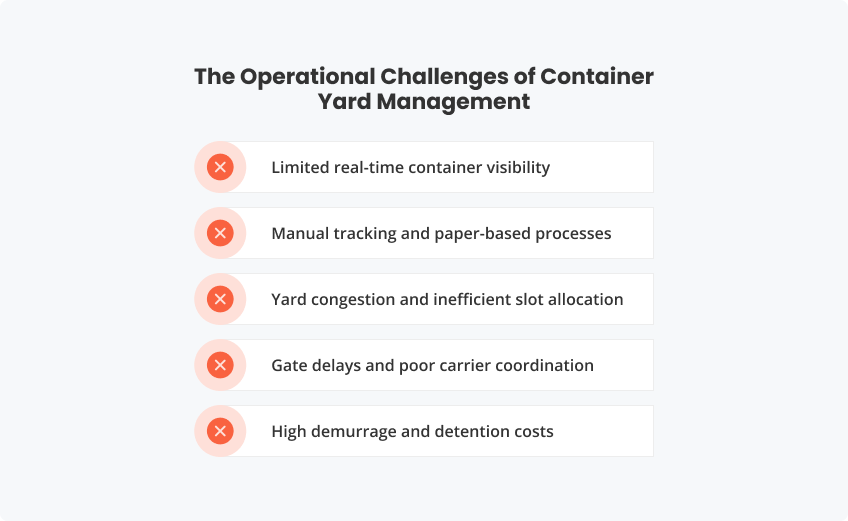
Limited real-time container visibility
If teams cannot see where a container actually is, every move becomes slower.
A dispatcher may assign a pickup based on an outdated location. The crew then spends valuable time searching, reshuffling, and updating others. A yard visibility system removes that guesswork.
Manual tracking and paper-based processes
Many operations still rely on calls, spreadsheets, or handwritten notes. That creates delays, duplicate work, and avoidable errors.
Manual tracking also makes it harder to spot exceptions early. By the time an issue appears, the queue is already forming.
Yard congestion and inefficient slot allocation
Poor slot allocation is one of the highest hidden costs in container yard operations.
If low-priority units block urgent ones, rehandles rise and equipment productivity falls. Smart slotting helps place the right box in the right space from the start.
Gate delays and poor carrier coordination
This is often the first pain point carriers notice.
Without pre-registration, appointment control, or clear arrival instructions, truck queues grow fast. That frustrates drivers and puts pressure on gate staff.
High demurrage and detention costs
Every unnecessary day in the yard adds cost.
When container dwell time drifts upward, demurrage and detention often follow. Those charges hurt because they are frequently linked to process problems that can be fixed.
What Is a Yard Management System (YMS)?
This is where a more controlled, digital approach begins.
Definition and core purpose
A yard management system is software that plans, tracks, and optimizes yard activity.
It gives operations teams one shared view of containers, vehicles, tasks, appointments, and exceptions. In short, it helps convert complexity into manageable workflows.
How YMS digitizes container yard operations
An YMS replaces disconnected coordination with a single digital process.
It typically supports:
- real-time container tracking
- gate check-in automation
- yard slot allocation
- task dispatching for staff and equipment
- alerts, reporting, and KPI monitoring
Combined with tools such as friendlyway’s digital workflow solutions, this creates a smoother arrival and handling process from the gate onward.
YMS vs TOS: understanding the difference
A Terminal Operating System focuses mainly on terminal and vessel-related operations. A YMS focuses on the yard itself.
That includes where containers sit, how they move, when carriers arrive, and how yard capacity is used. In many cases, both systems work best together.
Cloud-based and scalable YMS platforms
Cloud-based platforms are especially attractive for multi-site operators.
They simplify deployment, support standardized workflows, and allow teams to manage multiple sites without adding unnecessary IT complexity.
How a YMS Enables Smarter Container Yard Management
Once the yard is digitized, performance improves in visible, practical ways. This is where a smart container yard starts to take shape.
Real-time container tracking and yard visibility
The first gain is clarity.
Teams can see container status and location in real time, reducing search time and improving move planning. That alone can remove a surprising amount of daily friction.
Automated yard slot and space optimization
A YMS helps assign storage based on priority, dwell expectations, and destination.
That improves flow optimization, cuts rehandles, and makes better use of limited space.
Smart gate check-in and self-service registration
This is one of the fastest wins.
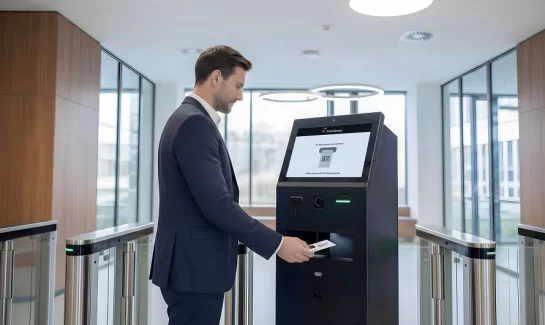
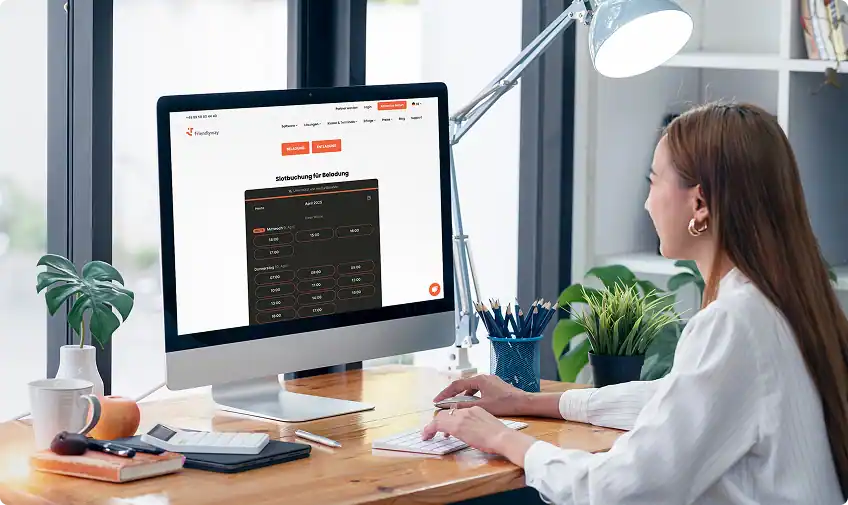
Drivers can pre-register, confirm appointments, and receive instructions before reaching the gate. With solutions from friendlyway, self-service touchpoints can also reduce manual workload for on-site teams.
Dock, crane, and equipment coordination
Visibility is only useful if it leads to better execution.
A YMS helps coordinate cranes, trucks, and handling equipment to sequence tasks more efficiently and reduce idle time.
Automated alerts and exception management
No yard runs exactly to plan.
Containers miss cut-off times. Drivers arrive outside their slot. Equipment becomes unavailable. A YMS flags these issues early so teams can act before delays spread.
Data-driven operational decisions
Good operators know when something feels off. A YMS shows why.
With reliable data, managers can adjust staffing, appointment windows, and space allocation based on actual patterns instead of assumptions.
Simplify yard management and reduce dwell time with a cloud-based YMS tailored for ports and depots.
Key Features of a Container Yard YMS
Not every feature matters equally. The best systems focus on what improves speed, visibility, and control on the ground.
- Container location dashboard – Interactive visualization of container positions.
- Carrier appointment scheduling – Smooth coordination with trucks and rail operators.
- Access control and security monitoring – Enhanced compliance and safety.
- Integration with port, ERP, and logistics systems – Seamless data flow across platforms.
- Mobile applications for yard staff – Real-time updates on the go.
- Performance reporting and KPI analytics – Measure efficiency and spot bottlenecks.
Business Benefits of Implementing a YMS
The value of yard automation systems is not just operational. It is financial, commercial, and strategic.
Reduced container dwell time
Containers are easier to find, prioritize, and release.
Lower detention and demurrage costs
Better flow reduces avoidable delays and penalty charges.
Increased yard throughput
More volume can move through the same footprint.
Improved asset and equipment utilization
Equipment spends less time waiting for instructions or clearing avoidable blockages.
Enhanced security and compliance
Digital records improve traceability and accountability.
Greater operational transparency
Operations, customer service, and management all work from the same live picture.
KPIs for Smarter Container Yard Operations
A smarter yard needs clear metrics. These KPIs help teams track whether process changes are truly improving performance.
| KPI | Why it matters |
|---|---|
| Container dwell time | Shows how long boxes stay in the yard |
| Yard capacity utilization | Reveals whether space is being used well |
| Gate processing time | Measures carrier experience and entry efficiency |
| Equipment productivity | Tracks how effectively assets are used |
| On-time container release | Reflects service reliability |
Who Needs a YMS for Container Yard Management?
YMS is not only for major seaports. It is relevant anywhere container movements, space constraints, and timing pressure meet.
- Ports and marine terminals – Optimize inbound and outbound flows.
- Intermodal rail yards – Coordinate train arrivals and truck transfers.
- Container depots – Manage storage, maintenance, and dispatch.
- 3PL and logistics operators – Reduce bottlenecks in multi-client yards.
- Large distribution and freight hubs – Ensure smooth operations at scale.
How to Choose the Right YMS for Container Yards
Choosing the right platform means balancing today’s needs with tomorrow’s growth. The system should simplify operations now while leaving room for expansion.
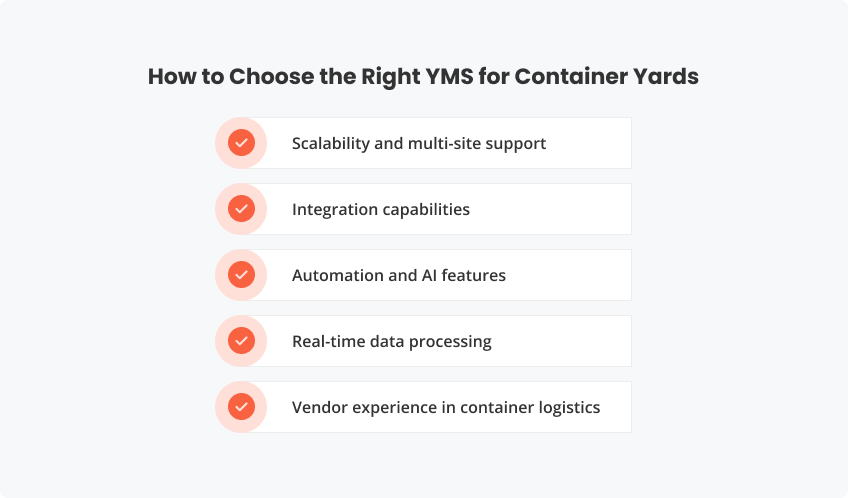
Scalability and multi-site support
The platform should support growth without forcing a full reset later.
Integration capabilities
Strong API and system connectivity are essential for smooth data exchange.
Automation and AI features
Look for practical features that reduce manual work and improve decisions.
Real-time data processing
Live data supports faster responses and better planning.
Vendor experience in container logistics
A vendor should understand yard reality, not just software delivery.
Implementation Best Practices
Even strong container tracking software needs a disciplined rollout. A clear implementation approach helps teams achieve value faster and avoid disruption.
1. Yard process assessment
Map the current process and identify the main friction points first.
2. Phased rollout strategy
Start with the areas where gains are easiest to prove, then expand.
3. Staff training and change management
Adoption improves when teams see how the system removes daily obstacles.
4. Continuous KPI monitoring and optimization
Go-live is the beginning, not the finish. The real gains come from continuous improvement.
Experience faster, smarter, and more transparent operations with friendlyway.
A well-run yard feels different immediately. Drivers spend less time waiting. Staff spend less time searching. Containers move with fewer surprises. That is the real value of modern container yard management: better visibility, faster decisions, and more reliable container flow.
For operators looking to improve service without adding complexity, a YMS is no longer optional. It is the foundation of a smarter yard.
FAQ
A TOS manages ship-to-shore operations, while a YMS handles internal yard processes, including container movement, gate check-ins, and slot allocation.
Yes. By optimizing slot allocation, automating gate processes, and providing real-time visibility, YMS significantly shortens dwell time.
Absolutely. Cloud-based YMS platforms scale down efficiently, offering automation and tracking benefits without large infrastructure investments.
Implementation varies by site size, but phased rollouts typically take 3–6 months, with immediate gains visible in the early stages.
Yes. Modern YMS solutions integrate with TOS, ERP, and other port logistics software to provide end-to-end visibility and control.