
(Prefer videos? Watch a brief summary of this article below.)
A truck queue at the gate looks ordinary until the ripple starts. One driver waits for paperwork. A dock team stands idle. A trailer blocks a lane. By the afternoon, one small delay has turned into late shipments, overtime, and angry phone calls.
That is why logistics leaders are rethinking the space between road and warehouse — and why yard management software matters in the shift toward smarter, safer, faster site operations.
At a Glance
- Automation starts at the gate: Digital check-in, vehicle recognition, and guided driver workflows reduce manual friction.
- Visibility is the real prize: Teams need to know what arrived, where it is, and what happens next.
- Connected systems win: The strongest setup links kiosks, sensors, ERP, WMS, TMS, access control, and dock planning.
- The next step is predictive: AI, IoT, and telematics are moving operations from “find and fix” to “sense and prevent.”
Why Logistics Yards Are Moving Toward Automation
The pressure is not abstract. It arrives every day in the form of late inbound freight, tighter carrier slots, labor shortages, and higher customer expectations.
Growing pressure on speed and efficiency
A food distributor, for example, may receive fresh goods in narrow delivery windows. If one refrigerated vehicle waits too long, product quality and dock planning both suffer.
Logistics yard automation helps turn unpredictable peaks into planned flow. The aim is not only speed. It is control.
The limits of manual yard operations
Clipboards, radios, spreadsheets, and phone calls still run many sites. They work on quiet days. They fail during peaks.
Manual routines create familiar problems:
| Manual issue | Operational effect |
|---|---|
| Paper check-in | Slow gate processing |
| Radio-only moves | Lost trailer time |
| Static dock plans | Congestion |
| No live status | Poor decisions |
What Yard Automation Really Means Today
Automation is no longer a single tool. It is a connected operating model.
Beyond basic digitization
Scanning a form is not a transformation. Real progress happens when data triggers action.
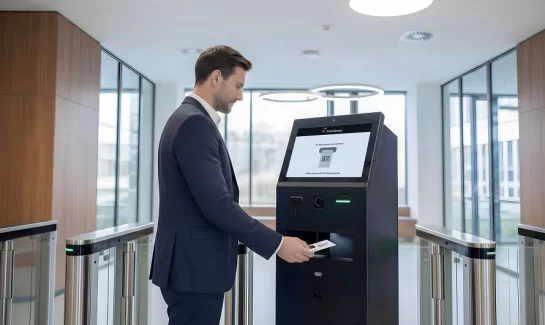
A driver checks in. The system verifies the booking. The barrier opens. A kiosk prints instructions. The dock team receives a notification. That is automated yard management in practice.
From reactive to real-time operations
Old workflows ask, “Where is that trailer?” Smart yard logistics asks, “What should move next?”
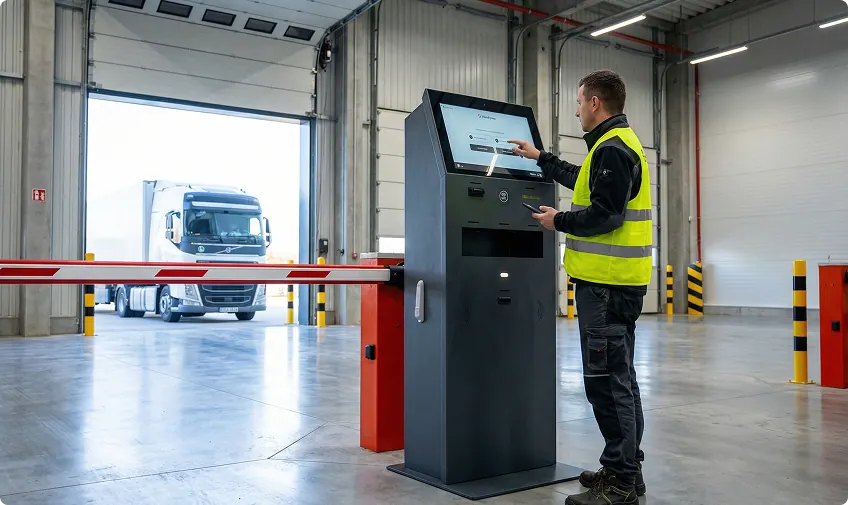
Give drivers a clear self-service path from arrival to dock assignment.
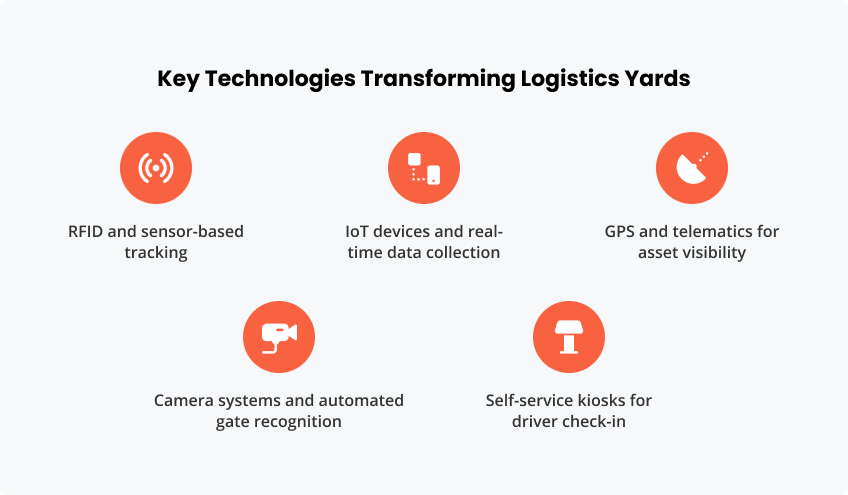
Key Technologies Transforming Logistics Yards
The best results come when technologies support one shared process rather than isolated pilots.
RFID and sensor-based tracking
RFID yard tracking helps teams identify trailers, containers, and assets without constant manual checks. It is useful at high-volume gates, staging zones, and trailer parking rows.
IoT devices and real-time data collection
An IoT logistics yard uses sensors, status signals, and connected devices to capture what is happening in the moment. This supports temperature checks, bay occupancy, gate status, and safety alerts.
GPS and telematics for asset visibility
GPS asset tracking is valuable across larger compounds, ports, and multi-building facilities. Telematics can show vehicle location, dwell patterns, and route deviations before they become delays.
Camera systems and automated gate recognition
Automated gate systems use license plate recognition, cameras, and access rules to identify vehicles faster. This is especially helpful where security and throughput must work together.
Self-service kiosks for driver check-in
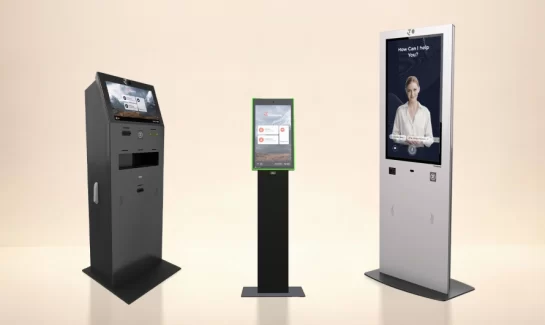
Kiosks are the human-facing layer of the yard automation system. With friendlyway kiosks, drivers can check in by QR code, PIN, or ID, receive multilingual instructions, and move without waiting for gate staff.
Automation at the Gate, Yard, and Dock
A smart logistics yard connects three zones that are often managed separately.
Gate automation and vehicle identification
At the gate, automation checks appointments, IDs, safety documents, and access rights. The goal is simple: verify quickly and guide correctly.
Yard movement optimization
Once inside, vehicles need logical routing. Yard movement optimization helps assign parking, staging, shunting, and next actions based on real capacity.
Dock scheduling and coordination
Dock scheduling automation matches appointments with loading capacity. It reduces conflict between inbound, outbound, urgent, and temperature-sensitive flows.
The Role of Yard Management Systems in Automation
Technology only delivers value when teams can act on the data.
Centralizing data from multiple technologies
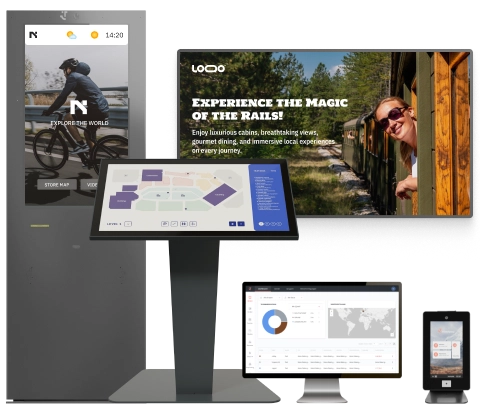
A yard management system brings arrivals, dock plans, access events, trailer status, and driver communication into a single view. The friendlyway Cloud Platform supports modular workflows, integrations, reporting, and self-service touchpoints across physical locations.
Enabling real-time decision making
Real-time logistics tracking gives planners a live picture. When a carrier arrives early, a dock changes status, or a trailer blocks a lane, the team can respond before the queue grows.
What Improves with Yard Automation
The business case is strongest when improvements are measured against daily operations.
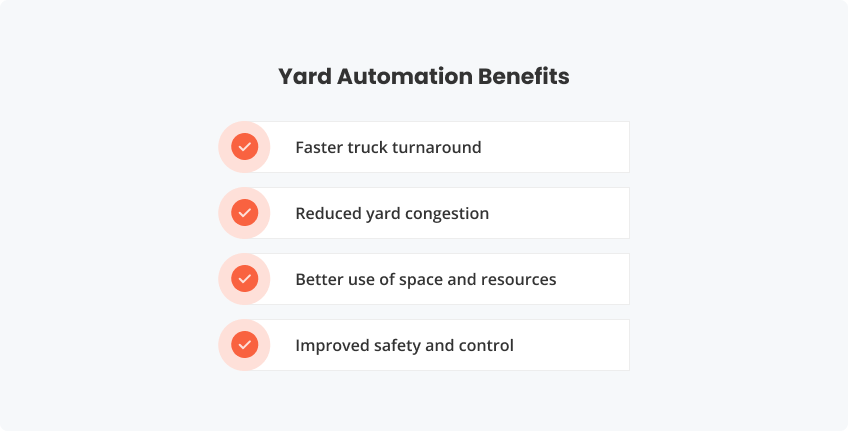
Faster truck turnaround
Drivers spend less time waiting for gate checks, paper forms, and instructions. That supports better carrier relationships and fewer avoidable delays.
Reduced yard congestion
Digital slot control and guided movements prevent random peaks. A 3PL cross-dock can balance inbound arrivals against outbound loading waves instead of reacting lane by lane.
Better use of space and resources
When teams know whether a truck is parked, loaded, empty, delayed, or ready, they use space more efficiently. Yard jockeys make fewer wasted trips.
Improved safety and control
Access rules, digital instructions, and digital signage can guide drivers through PPE rules, traffic routes, and emergency messages. That matters on industrial sites with mixed pedestrian, forklift, and heavy vehicle flows.
Challenges in Implementing Yard Automation
Implementation succeeds when it respects real operations, not just software design.
Integration with existing systems
Most companies already run ERP, WMS, TMS, access control, and carrier portals. A good plan starts with interfaces, data ownership, and exception handling.
Change management and process alignment
Automation exposes messy processes. That is useful, but uncomfortable.
Start with one flow: booked arrivals, self-service check-in, or dock scheduling. Prove value. Then expand.
Investment and ROI considerations
ROI should include labor time, gate throughput, detention risk, safety incidents, space use, and missed appointments. For many sites, the fastest gains come from gate check-in and dock coordination.
Where Yard Automation Delivers the Most Impact
Not every site needs the same setup. The strongest use cases share complexity, volume, and time pressure.
High-volume distribution centers
Retail and e-commerce facilities benefit from tighter scheduling, faster intake, and live dock status. Even small minutes saved per truck add up.
Manufacturing and industrial sites
Factories need a stable material flow. A delayed component trailer can stop a production line. Warehouse yard automation helps protect production plans and outbound commitments.
Logistics hubs and 3PL operations
3PLs manage multiple customers, carriers, and service levels at once. A smart yard logistics approach gives each stakeholder better visibility without adding more calls.
What Comes Next in Yard Automation
The next wave will make operations more predictive, more connected, and less dependent on manual searching.
AI and predictive yard management
AI can forecast gate peaks, suggest dock changes, and flag assets likely to miss a slot. The practical value is not “AI for AI’s sake” — it is fewer surprises.
Autonomous yard vehicles
Autonomous yard operations are emerging in controlled environments. Shunting vehicles, sensors, and digital maps may eventually reduce repetitive internal moves.
Fully connected smart yards
The long-term vision is a smart logistics yard where every gate, dock, kiosk, screen, trailer, and system shares context. The result is not a futuristic showroom. It is a calmer shift, fewer blind spots, and better decisions.
Connect self-service check-in, access control, dock planning, and real-time communication in one practical workflow.
Yard automation technologies are changing logistics by solving a very human problem: uncertainty. When drivers know where to go, planners know what is happening, and systems share the same truth, the whole operation breathes easier.
The companies that act now will not just reduce delays. They will build sites that are safer, more transparent, and ready for the next decade of supply chain pressure.
FAQ
Yard automation is the use of digital tools, sensors, software, kiosks, and connected workflows to manage vehicle arrivals, parking, trailer moves, dock assignments, and departures with less manual effort.
Common technologies include RFID yard tracking, IoT sensors, GPS asset tracking, telematics, automated gate systems, license plate recognition, dock scheduling tools, self-service kiosks, and a yard management system.
It improves yard visibility, reduces gate delays, shortens truck turnaround, supports better dock planning, lowers congestion, and provides teams with real-time data to enable faster decisions.
Yes, in most complex environments. Individual tools can automate single tasks, but a YMS connects gate, dock, driver, trailer, and reporting workflows into a single controlled process.
The future is predictive and connected. AI, IoT, telematics, autonomous vehicles, and real-time logistics tracking will support smarter planning, fewer exceptions, and more autonomous yard operations.