
(Prefer videos? Watch a brief summary of this article below.)
A truck that waits at the gate is never just waiting. It blocks a lane, delays a dock, frustrates a carrier, and quietly pushes the warehouse plan off balance. Across a busy logistics site, that small delay can repeat dozens of times before lunch.
That is why logistics yard management has become a serious topic for manufacturers, retailers, 3PLs, and distribution networks. The outside logistics area is no longer just space around a building. It is the handover point between transport, warehousing, safety, and customer promise.
At a Glance
- Logistics yard management coordinates trucks, trailers, gates, parking zones, docks, drivers, and on-site workflows.
- Operational visibility helps teams know who has arrived, where each trailer is, and what should happen next.
- Common issues include weak trailer tracking, manual check-in, congestion, missed appointments, and detention and demurrage costs.
- A yard management system supports gate access, carrier appointment, and dock scheduling, real-time tracking, and yard automation.
- Better control reduces waiting time, improves safety, and strengthens supply chain visibility.
What Is Logistics Yard Management?
Before goods enter the warehouse, they pass through a physical and operational transition zone.
Simple definition in the supply chain context
Logistics yard management is the coordination of vehicle and trailer activity around a logistics site.
It covers:
- Truck arrivals
- Gate access
- Parking and staging
- Trailer tracking
- Dock allocation
- Driver communication
- Loading and unloading status
- Departure handling
In practical terms, logistics yard operations management answers three questions: Who is on site? Where should they go? What happens next?
Where the yard fits between transportation and warehousing
The yard sits between transport and the warehouse.
Transport teams think in routes, shipments, and delivery windows. Warehouse teams think in terms of inventory, labor, and dock capacity. The outside area is where those worlds meet.
Imagine a food distribution center near Rotterdam. Fresh goods arrive early. Store replenishment leaves later. A delayed inbound trailer can affect cold-chain handling, picking plans, and outbound delivery promises.
Why Yard Management Matters More Than You Think
This area often looks simple from the outside. Operationally, it is a control point.
Small delays add up quickly.
A driver waits at the gate. A trailer is parked in the wrong lane. A dock team searches for paperwork. Security calls operations. Operations calls the warehouse. The warehouse checks with transport.
Nobody is lazy. The process is just fragmented.
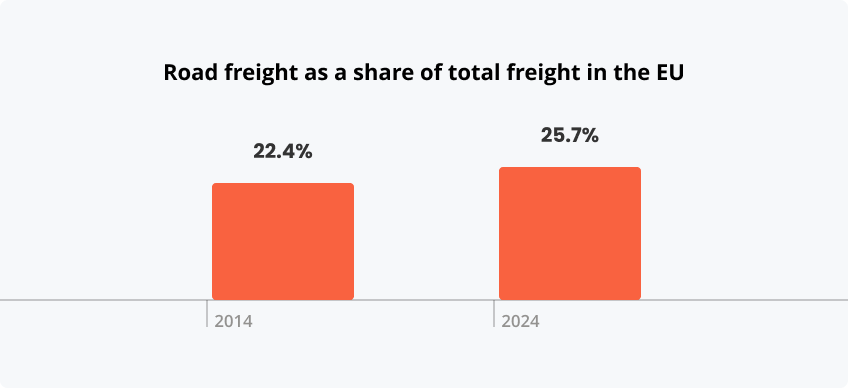
Eurostat reported recently that road freight accounted for 25.7% of freight transport performance within EU territory in 2024 and was the only mode of transport with a growing share over the past 10 years. (The share of maritime transport meanwhile decreased to 67.0%.)
This shows how much European logistics still depends on well-managed truck flows.
How yard inefficiencies affect the entire supply chain
An inefficient site does not stay local.
One misplaced trailer can delay production. One blocked lane can make several carriers miss their next appointment. One slow gate can turn a planned dock schedule into improvisation.
That is why supply chain visibility must include what happens outside the warehouse door.
What Happens Inside a Logistics Yard?
Many important movements happen before a pallet crosses the dock line.
Truck arrivals and gate processing
The gate is often the first bottleneck.
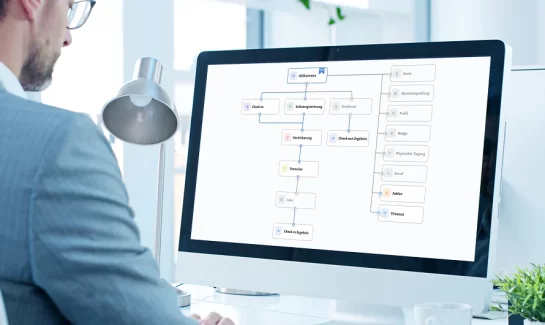
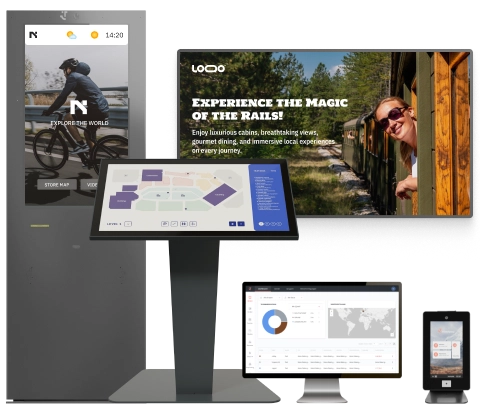
A driver arrives, confirms the appointment, shares documents, receives safety instructions, and gets the next step. A modern gate check-in system can use QR codes, license plate recognition, PINs, multilingual kiosk screens, and automated access control.
The friendlyway yard management solution helps digitize gate handling, driver guidance, dock coordination, and vehicle flow across logistics sites.
Trailer parking and yard movements
After check-in, the vehicle may go to a dock, a waiting zone, or a staging lane.
Dropped trailers may need inspection, sealing, cleaning, cooling checks, or movement by a shunter. Without real-time tracking, teams rely on memory, spreadsheets, and radio calls.
That may work on a quiet morning. It breaks during peak volume.
Dock door assignment and loading operations
Dock doors are valuable assets.
If the dock is free but the trailer is missing, labor waits. If the trailer is ready but the dock is occupied, the carrier waits. Scheduling tools help align appointments, capacity, priorities, and actual arrival times.
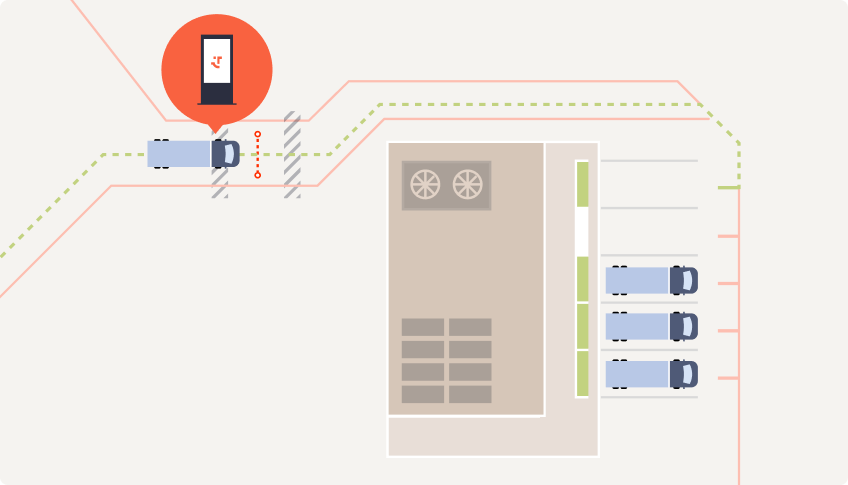
Typical Yard Management Process
The workflow is easy to describe. It is harder to run consistently every day.
1. Arrival and check-in
The carrier arrives at the site and begins check-in.
A digital process captures driver details, vehicle ID, shipment data, access permission, safety confirmation, and appointment status. This can happen via kiosk, tablet, mobile link, or guardhouse terminal.
The friendlyway visitor management solution is relevant here because industrial sites often need the same secure logic for guests, contractors, suppliers, and drivers.
2. Yard allocation and waiting
The system or coordinator assigns the next location.
This may be a waiting lane, a parking bay, an inspection area, or a dock queue. Clear instructions reduce wrong turns, blocked lanes, and unnecessary calls.
For global sites, multilingual guidance is not a nice extra. It prevents mistakes.
3. Dock handling
When a dock becomes available, the driver or shunter receives instructions.
The best operations do not just react. They prioritize based on temperature sensitivity, production demand, customer promise, carrier slot, or labor availability.
4. Departure and check-out
After loading or unloading, the truck leaves the site.
Check-out records departure time, documents, exceptions, and access history. This data supports audits, carrier scorecards, claims, and continuous improvement.
Connect gate check-in, dock planning, driver guidance, and live site visibility with friendlyway.
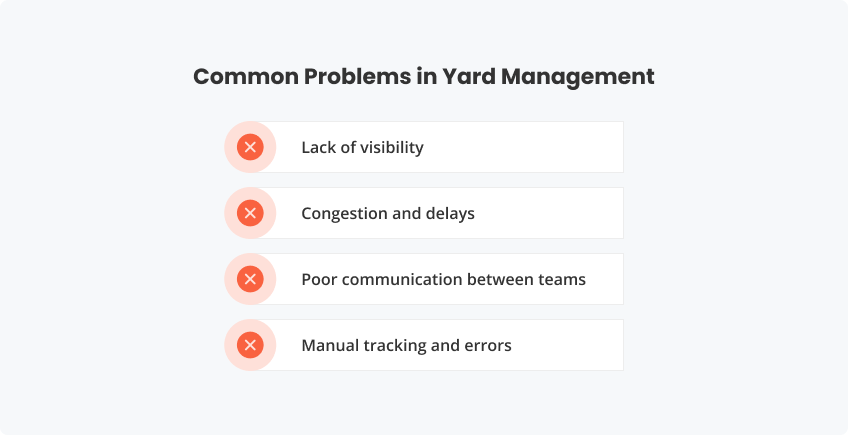
Common Problems in Yard Management
Most issues are not dramatic. They are repeating frictions that drain time.
Lack of visibility
Teams may know a truck arrived. They may not know where it is, whether it is loaded, or when it can move.
That uncertainty slows every decision.
Congestion and delays
Yard congestion appears at gates, waiting lanes, turning areas, and dock aprons.
It often starts with weak carrier appointment scheduling. Too many trucks arrive within one window. Too few docks are ready.
Poor communication between teams
Security, transport, warehouse, planning, carriers, and site supervisors often use different tools.
Emails, calls, radio messages, and spreadsheets create noise. Worse, they create different versions of the truth.
Manual tracking and errors
Manual logs fail under pressure.
A number is typed incorrectly. A trailer is moved but not updated. A driver receives old instructions. Then the team wastes time fixing a preventable error.
How Companies Improve Yard Operations
Better results come from process discipline, practical technology, and shared data.
Better planning and scheduling
Start with appointments.
Separate inbound and outbound peaks. Reserve capacity for urgent loads. Give carriers clear booking rules. Measure actual arrival behavior against planned slots.
Standardizing yard processes
Every site needs simple, shared rules.
Define gate steps and mark waiting areas. Standardize safety briefings. Create escalation paths for late arrivals, missing paperwork, blocked docks, and priority shipments.
Using real-time data for decisions
Live data turns the site from reactive to controlled.
Teams can see which vehicles are present, which trailers are waiting, which docks are active, and where delays are building. That makes decisions faster and less emotional.
What Is a Yard Management System (YMS)?
A YMS gives structure to the external logistics area.
Simple explanation
A yard management system is software that manages the movement, status, and timing of trucks and trailers around a logistics facility.
Good yard management software connects gates, docks, vehicle areas, drivers, and back-office systems. It may integrate with WMS, ERP, access control, video systems, digital signage, and warehouse yard management tools.
When companies start using YMS
Companies usually look for a YMS system when they face:
- Frequent driver waiting time
- Slow gate processing
- Missing trailers
- Dock queues
- Manual vehicle logs
- Weak audit trails
- Multi-site inconsistency
- Rising detention and demurrage exposure
The business case becomes stronger when driver time is scarce. In 2025, IRU reported that 3.6 million truck driver positions remained unfilled across countries that represent 70% of global GDP.
How YMS supports yard operations
A practical system supports daily work.
It helps teams:
- Pre-register carriers
- Confirm time slots
- Automate gate check-in
- Guide drivers
- Track trailers
- Assign docks
- Notify teams
- Record events
- Analyze delays
The value is not only speed. It is control.
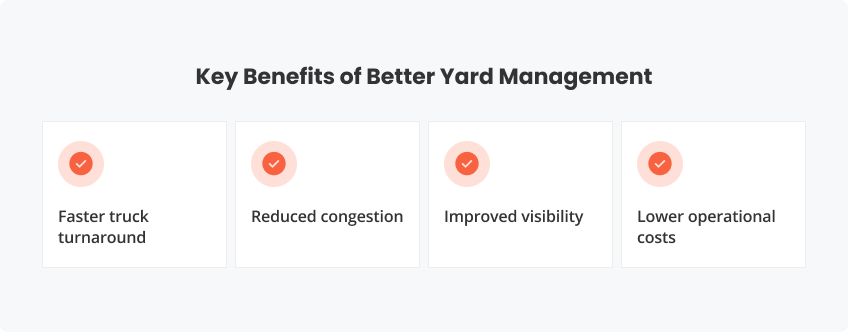
Key Benefits of Better Yard Management
The best gains appear when people, process, and technology work together.
Faster truck turnaround
Fast turnaround begins before arrival.
If documents, access rights, safety steps, and instructions are ready, the gate becomes a checkpoint rather than a bottleneck.
Reduced congestion
Traffic pressure falls when arrivals are balanced, and movements are visible.
Drivers spend less time asking questions. Supervisors spend less time searching. Dock teams spend less time waiting.
Improved visibility
Better yard visibility helps every stakeholder.
Transport sees status. Warehouse teams see priorities. Security sees who is on site. Management sees performance.
Lower operational costs
Cost reduction comes from fewer delays, fewer manual tasks, better dock use, and lower risk of penalties.
Many savings are quiet. Ten minutes saved; one phone call avoided; one missed slot prevented.
Who Needs Yard Management the Most?
Any location with regular truck traffic can benefit. Some feel the pressure sooner.
Large distribution centers
High-volume DCs depend on rhythm.
Retail, grocery, e-commerce, and spare parts networks must coordinate inbound and outbound flows with precision. A single slow gate can disturb hundreds of downstream tasks.
Manufacturing facilities
Manufacturers need material availability and outbound reliability.
A delayed inbound load can stop a line. A late outbound shipment can miss a customer window. For factories, the external logistics area protects production.
Logistics and 3PL companies
3PLs handle many customers, carriers, and priorities at once.
They need clear rules, flexible workflows, and transparent reporting. A stronger YMS helps prove service quality, not just deliver it.
Combine self-service kiosks and secure workflows for high-traffic logistics sites.
Logistics yard management is not about adding software for the sake of it. It is about making the busiest physical handover in the supply chain predictable. When trucks arrive with clear appointments, drivers receive simple instructions, trailers are visible, and docks are coordinated, the whole operation breathes easier. The site stops being a blind spot. It becomes a performance lever.
FAQ
It is the coordination of trucks, trailers, gates, docks, drivers, parking zones, and vehicle movements at a warehouse, manufacturing, or logistics site.
It reduces delays between transport and warehousing. It also improves dock productivity, safety, visibility, carrier experience, and overall supply chain reliability.
It helps solve congestion, missing trailers, manual check-in errors, poor communication, unbalanced dock schedules, weak trailer tracking, and limited real-time visibility.
You need a system when manual processes can no longer handle truck volume, appointment complexity, gate control, trailer status, or reporting requirements.
Start with better planning, carrier appointment scheduling, standardized check-in, clear site rules, dock scheduling software, real-time tracking, and automation to remove repetitive work.