
(Prefer videos? Watch a brief summary of this article below.)
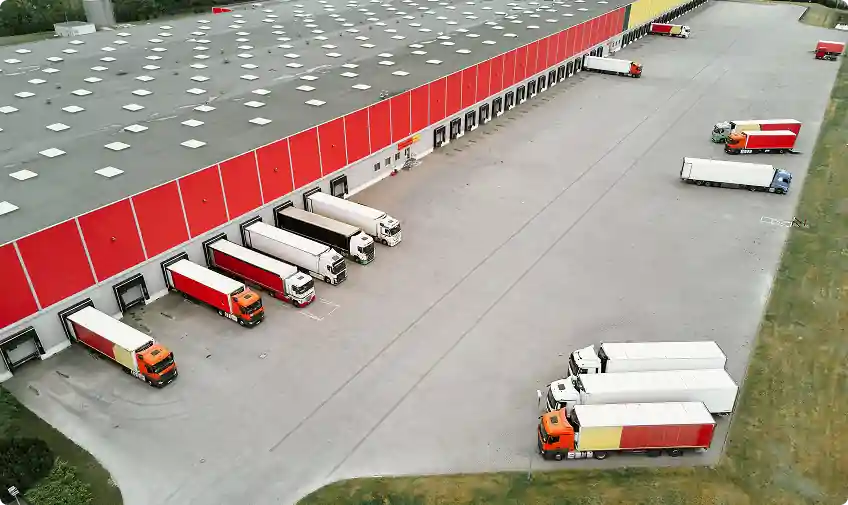
A warehouse can run like clockwork inside and still lose the day outside. One trailer is in the wrong lane. A driver waits without instructions. A dock door is ready, but the freight is not. Nobody sees the full picture, so everyone starts guessing.
That is the real importance of yard visibility. It is not about another dashboard. It is about knowing what is happening between the gate, parking area, dock, driver, carrier, and warehouse before small delays turn into expensive problems.
Key Facts at a Glance
- Yard visibility helps logistics teams see trucks, trailers, dock status, and movements in one operational view.
- Low transparency creates delays, yard congestion, idle labor, missed dock slots, and detention fees.
- Real-time tracking improves decisions because teams no longer rely on phone calls, paper lists, or radio updates.
- Connected workflows across gate, yard, and warehouse improve logistics efficiency and strengthen supply chain visibility.
- A yard management system can serve as the visibility layer that connects scheduling, tracking, and reporting.
What Yard Visibility Means in Logistics
Yard visibility in logistics is about control over the space where transport meets warehouse execution. It shows what has arrived, what is waiting, what needs action, and what is blocking the next move.
Beyond knowing where trailers are
Knowing the trailer location is useful. But it is only one part of the story.
A good yard visibility system also answers:
| Question | Why it matters |
|---|---|
| Has the truck arrived? | Gate teams can reduce manual follow-up. |
| Is the trailer loaded or empty? | Dock teams can plan the next move. |
| Which door is available? | Warehouse supervisors avoid scheduling conflicts. |
| How long has the carrier waited? | Logistics managers can prevent detention costs. |
| What needs urgent attention? | Teams can act before delays spread. |
This is the difference between static information and operational intelligence.
Visibility across the gate, yard, and dock
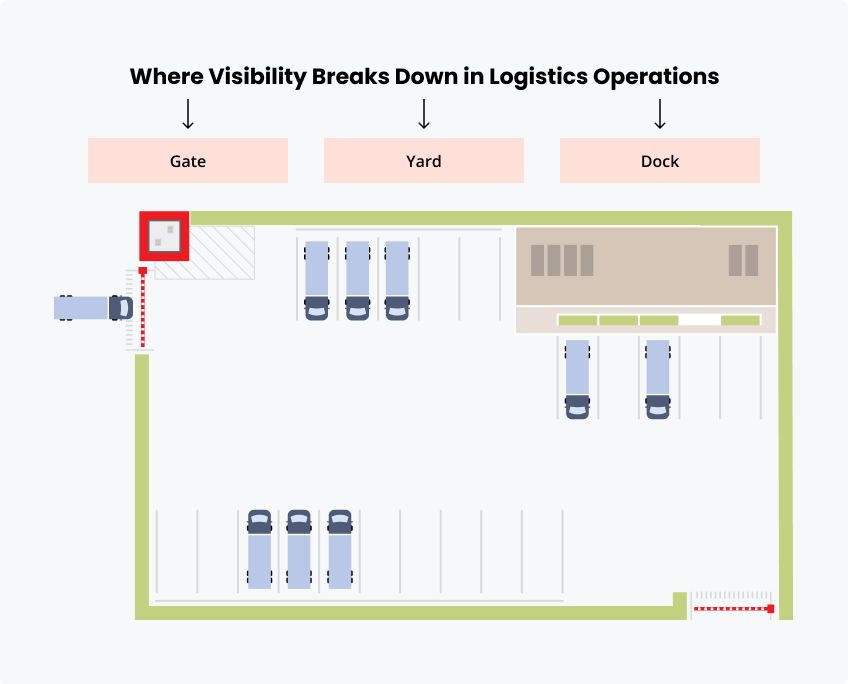
Real-time yard visibility becomes valuable when it connects three zones: gate, outdoor area, and dock.
At the gate, teams need fast check-in and clear instructions. In the outdoor area, they need trailer tracking and movement status. At the dock, they need accurate loading and unloading information.
When those zones work separately, the site becomes slow. When they share data, decisions become faster and calmer.
Why Lack of Visibility Creates Problems
Most problems do not start as dramatic failures. They start quietly. A missing update. A late driver. A trailer is parked in the wrong place.
Delays in finding trailers
A shunter spends 20 minutes searching for a trailer. Then another team calls to ask why the dock is still empty. The warehouse is ready, but the asset is not.
This kind of delay is common in busy warehouse yard operations. It feels small once. Repeated across dozens of moves, it becomes a serious loss of capacity.
Poor coordination between teams
Gate staff, warehouse teams, security, carriers, and yard drivers all need the same truth. Without it, each group works from its own version of reality.
The result is familiar:
- phone calls replace planning;
- radio traffic increases;
- supervisors interrupt work to check status;
- drivers receive unclear instructions;
- dock doors sit idle while trucks wait elsewhere.
Poor coordination does not always look chaotic. Sometimes it looks like everyone is busy, while little actually moves.
Limited control over yard operations
Without live information, managers react late. They notice congestion after it has formed. They discover missed shipments after the cut-off time has passed.
Control means seeing risk early. That is why logistics visibility yard processes should not stop at transport tracking. They must include what happens on-site.
Where Visibility Breaks Down in Real Operations
The breakdown usually happens at handover points. Every handover needs data. Every missing data point creates friction.
1. At arrival and gate processing
The gate is often the first blind spot. A driver arrives early, late, or without the right reference. Security checks the appointment manually. The dock team may not know the truck is already on site.
Digital check-in, QR codes, self-service kiosks, and automated notifications help close this gap. The friendlyway gate management solution supports structured arrivals, driver guidance, and live status updates for high-traffic sites.
2. During yard parking and movements
The next gap appears after entry. The truck is inside, but where exactly? Was it sent to a waiting lane, staging area, or dock? Has it moved since then?
This is where yard tracking visibility becomes critical. Trailer tracking, mobile updates, sensors, and clear parking rules reduce the time spent searching and confirming.
3. At the dock assignment and loading
Dock scheduling looks good in a planning system. Reality can be messier.
A dock may be booked, but the trailer is not ready. A driver may be waiting, but the warehouse has no capacity. A shipment may be urgent, but nobody has escalated it.
Visibility connects the schedule with the physical flow. It helps teams match plans with what is actually happening.
The Operational Impact of Low Visibility
Low visibility spreads. It affects drivers, warehouse labor, dock utilization, carriers, and customer service.
Increased waiting times for trucks
The 2026 CSCMP State of Logistics Report shows that U.S. business logistics costs reached $2.4 trillion, equal to 7.8% of GDP. In that environment, avoidable waiting time is not a minor inconvenience. It is part of a much larger cost problem.
When drivers wait at gates or docks, carriers lose productive hours. Sites also become harder to schedule because late releases affect the next arrival.
Yard congestion and bottlenecks
The American Transportation Research Institute’s 2026 bottleneck list measured truck-involved congestion at more than 325 freight locations. External road congestion is already difficult enough. Companies do not need to recreate the same bottleneck inside their own sites.
Yard congestion often comes from simple operational gaps:
- too many vehicles arriving at once;
- unclear parking rules;
- slow gate processing;
- missing trailer status;
- weak carrier scheduling;
- poor dock communication.
Missed shipments and delays
A missed shipment rarely has one cause. It is usually a chain.
The driver arrived late. The trailer was hard to find. The dock plan changed. The load was not prioritized. The carrier left after waiting too long.
With better visibility, teams can break that chain earlier.
The Cost of Poor Yard Visibility
The cost is not only financial. It also shows up in stress, overtime, missed targets, and damaged carrier relationships.
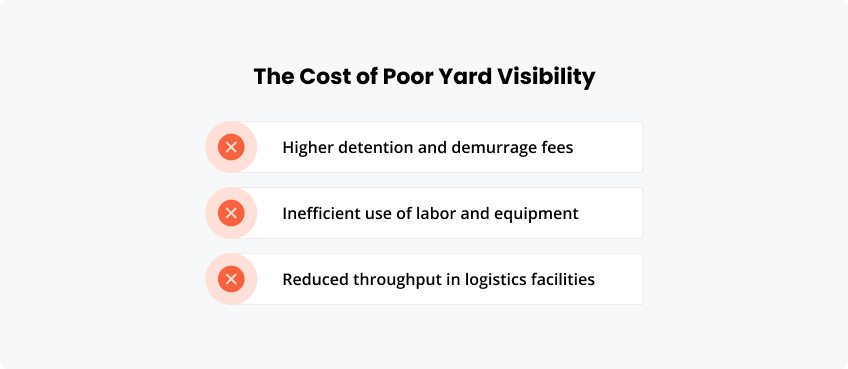
Higher detention and demurrage fees
Detention and demurrage charges are signals of delay. They show that an asset stayed too long where it should not have stayed.
Better visibility helps teams track dwell time, prioritize aged trailers, and act before free time runs out.
Inefficient use of labor and equipment
When information is missing, people compensate with movement. They walk across the site. They call colleagues. They recheck documents. They search for trailers.
Equipment suffers too. Yard trucks perform unnecessary moves. Dock doors wait. Forklift teams are rescheduled repeatedly.
Reduced throughput in logistics facilities
Throughput depends on rhythm. A site that loses visibility loses rhythm.
The facility may have enough docks, enough workers, and enough equipment. But if teams cannot see what comes next, the operation still slows down.
What Improves with Full Yard Visibility
Full transparency does not make logistics easy. It makes it manageable.
Faster decision-making
Managers can prioritize based on facts, not noise. They can see which trailer has waited longest, which door is ready, which carrier is late, and which move matters most.
That changes the site’s mood. Teams stop chasing information and start solving problems.
Better dock scheduling
Dock scheduling improves when it reflects real conditions. A schedule should not be a static plan on a screen. It should adapt to arrivals, loading progress, trailer status, and warehouse capacity.
This is especially important for retail distribution, manufacturing, 3PL facilities, and food logistics, where time windows are narrow, and delays travel downstream quickly.
Smoother coordination between teams
A shared operational view reduces friction between gate, security, warehouse, yard drivers, and transport planners.
Instead of asking, “Where is it?” teams can ask, “What should we do next?”
friendlyway helps logistics sites digitize arrivals, driver guidance, dock coordination, and real-time status updates.
How Companies Achieve Yard Visibility
Technology matters, but process comes first. A digital tool cannot fix unclear rules.
Standardizing yard processes
Companies should define how vehicles enter, wait, move, load, unload, and leave.
Start with a simple process map:
| Step | Standard to define |
|---|---|
| Appointment | Required data, time window, carrier details |
| Arrival | Check-in method, ID checks, documents |
| Parking | Zone logic, trailer status, safety rules |
| Dock assignment | Priority rules, door allocation |
| Movement | Who moves what and when |
| Departure | Release confirmation and reporting |
Once the process is clear, automation becomes much easier.
Using real-time tracking tools
Real-time tracking can include GPS, RFID, license plate recognition, mobile driver updates, sensors, or manual status confirmations through tablets and kiosks.
The right mix depends on the site. A smaller warehouse may need structured digital check-in and clear dock updates. A large distribution center may need advanced trailer tracking and automated alerts.
Connecting gate, yard, and warehouse data
Visibility improves when systems talk to each other. That can include transport management, warehouse management, ERP, access control, digital signage, and communication tools.
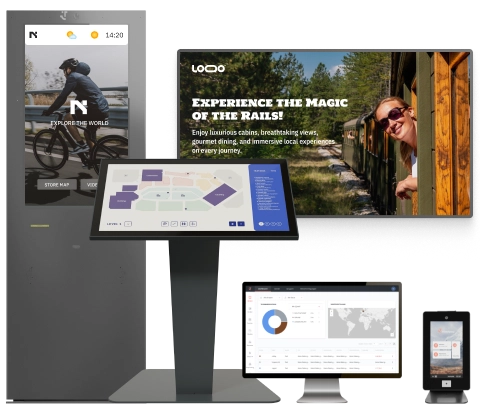
The friendlyway Cloud Platform is built for connected on-site experiences, from self-service touchpoints to centralized device and workflow management.
The Role of Technology in Visibility
Technology should remove guesswork, not create another screen nobody trusts.
Tracking systems and sensors
Tracking systems show location and status. Sensors can confirm movement, access events, or occupancy. License plate recognition can speed up gate workflows. Kiosks can guide drivers without waiting for staff.
For sites that also manage contractors and visitors, a visitor management solution can support secure entry, document capture, badges, and compliance workflows.
Real-time data platforms
A real-time platform turns events into decisions. It collects arrivals, movements, dock updates, waiting times, and exceptions.
Digital signage can also play a role. Screens at gates, waiting zones, or reception areas can display instructions, safety messages, and routing updates. friendlyway’s digital signage solution supports centralized content and connected screen communication across locations.
Yard management systems as a visibility layer
A yard management system is often the practical visibility layer between transport and warehouse execution.
It brings together:
- carrier scheduling;
- gate check-in;
- trailer tracking;
- dock scheduling;
- driver instructions;
- live status updates;
- reporting and KPIs.
In other words, it gives the outdoor operation the same discipline that companies already expect inside the warehouse.
Yard visibility is not a luxury for large logistics networks. It is a basic requirement for sites that want fewer surprises, faster flow, safer movement, and better customer service. The yard is where plans meet reality. When companies can finally see that reality clearly, they can manage it with confidence.
Explore how friendlyway supports digital check-in, live yard visibility, dock coordination, and connected workflows for logistics facilities.
FAQ
Yard visibility in logistics means having a clear, real-time view of trucks, trailers, drivers, parking zones, dock doors, and site movements. It helps teams understand what is happening outside the warehouse and what needs to happen next.
It is important because poor visibility causes delays, congestion, wasted labor, missed dock slots, and higher logistics costs. Better transparency helps teams make faster decisions and coordinate work across the gate, yard, and dock.
Poor visibility leads to trailer search time, long driver waiting times, inefficient dock use, repeated phone calls, and avoidable detention or demurrage fees. It also makes it harder to react to late arrivals, urgent shipments, and capacity changes.
Companies can improve visibility by standardizing processes, digitizing gate check-in, using real-time tracking, integrating warehouse and transport data, and providing teams with a shared operational view.
For complex or high-volume sites, yes. A yard management system helps connect carrier scheduling, gate processing, trailer tracking, dock scheduling, and reporting. Smaller sites may start with digital check-in and structured workflows, then expand toward a full YMS as traffic grows.