

Key Facts
- Visitor safety is a legal and operational responsibility: Under the General Duty Clause of the Occupational Safety and Health Act, employers must provide a workplace free from recognized hazards.
- Visitors face a higher risk in industrial and high-traffic environments because they lack site-specific training and hazard awareness.
- OSHA standards indirectly apply to visitors: Regulations on hazard communication, PPE, and warning signage are written for employees but are intended to protect anyone on the premises.
- Digital visitor management significantly improves safety and compliance by enforcing badge-based access limits, real-time visitor tracking, and faster emergency accountability.
- Emergency preparedness must include visitors: Effective evacuation plans, muster lists, and mobile alerts are essential to ensure that all on-site individuals are accounted for during incidents.
It’s equally important to protect all people who are present in the building, be they company employees or visitors. Temporary visitors, such as contractors, vendors, customers, or family members, can also be on the premises. When workplace injuries occur, they lead to enormous human and financial costs for the companies.
Let’s explore why on-site visitor safety is critical for companies and outline the practices compliant with OSHA (Occupational Safety and Health Administration) regulations that will help keep guests safe.
Why Visitor Safety Matters in the Workplace
Safety isn’t just a courtesy — it’s a critical component of an effective workplace visitor protocol and a key element of OSHA visitor safety efforts designed to protect facility guests. Whenever someone who is not a regular employee steps onto a work site, they may lack the familiarity and training that workers have, making them more vulnerable to hazards.
Visitor risks in industrial and high-traffic environments
In environments governed by strict industrial site rules, ensuring safety for facility guests is especially challenging due to heavy machinery, vehicles, and high foot traffic. In industrial settings like factories, warehouses, or construction projects, an unaware guest could wander into a hazardous zone and suffer serious injury. For example, pedestrian “struck-by” accidents that involve forklifts or trucks are often tragic and can result in permanent disability or death.
Legal obligations and employer liability
OSHA’s General Duty Clause (Section 5(a)(1) of the OSH Act) requires employers to provide a workplace “free from recognized hazards” likely to cause death or serious harm. While OSHA regulations focus primarily on employees, OSHA compliance for visitors and adherence to OSHA guidelines for non-employees remain essential to avoid liability and legal enforcement actions.
OSHA regulations applicable to visitors
OSHA doesn’t publish separate “visitor safety standards,” but many of its regulations and guidelines inherently apply to protecting anyone present at the workplace. Several specific OSHA standards, while written for employees, are highly relevant to all guests.
One example is the Hazard Communication Standard (29 CFR 1910.1200): it requires employers to inform and protect anyone exposed to hazardous chemicals. This requirement highlights the importance of hazard communication for guests, reinforcing OSHA guidelines for non-employees who may be exposed during their short-term visits.
OSHA Guidelines Relevant to Visitors
OSHA provides a framework for workplace safety that is centered primarily on employees, but gives valuable guidance on keeping all individuals safe, guests included. In this section, we will outline the OSHA principles and guidelines that are most relevant to visitor safety.
Overview of the general duty clause and visitor inclusion
OSHA does not explicitly require a written “visitor safety plan”. It is a catch-all provision that requires employers to provide a workplace free from serious recognized hazards. Although the General Duty Clause specifically mentions protecting “employees,” OSHA has consistently encouraged a broader safety culture. One OSHA guidance document on safety programs notes that a workplace violence prevention policy, for instance, “should cover all workers, patients, clients, contractors, and anyone else who may come in contact with company personnel.”
PPE requirements for non-employees
Visitor PPE requirements (wearing personal protective equipment) are a fundamental part of industrial safety, ensuring non-employees receive the same level of protection as workers in hazardous areas. While OSHA doesn’t explicitly state “give PPE to visitors,” it’s implied by the hazard assessment logic: if a certain area or task necessitates PPE for safety, any person who enters that environment should don the same protection.
Signage, barriers, and restricted zones
Clear visitor safety signage and enforced industrial site visitor rules help prevent unauthorized access to hazardous zones. For instance, OSHA’s specifications for accident prevention signs and tags (29 CFR 1910.145) outline the usage of “DANGER” signs for immediate hazards and “CAUTION” signs for potential hazards. The regulation explicitly states these signs are to warn “workers or members of the public”.
Training, briefings, and orientation
Unlike employees, visitors won’t go through OSHA 10-hour training or weeks of safety classes — but they still need some orientation to stay safe. OSHA does not mandate formal training for occasional guests. Nevertheless, informing non-employees of site-specific hazards and emergency procedures is vital for safety.
The idea is to provide each guest with a quick safety briefing that covers the essentials: what PPE they must wear, which areas or actions are prohibited, and what to do in case of emergency.
Key Safety Practices for On-Site Visitors
To keep non-employees safe on-site, companies should implement a series of practical safety protocols. In this section, we’ll cover the key safety practices.
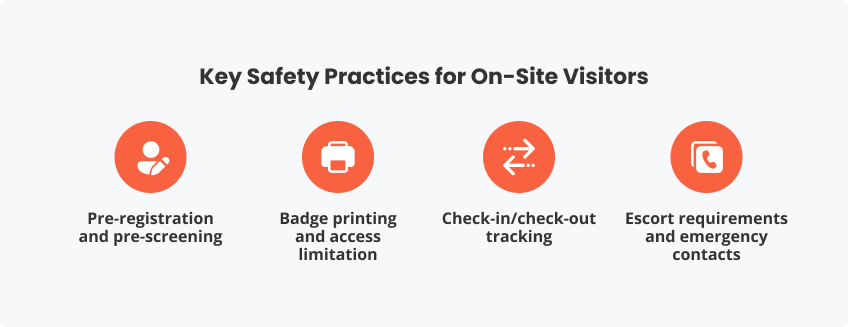
Pre-registration and pre-screening
Who is coming on-site, and are they prepared to follow our safety rules? Pre-registration typically means that non-employees provide their details and visit information before arrival, often through an online form. Visitor pre-screening is a foundational element of visitor management safety, helping organizations identify risks before guests arrive on-site. For example, you may check if they have certifications, have signed NDAs or waivers, or even run them through a security watchlist.
Badge printing and access limitation
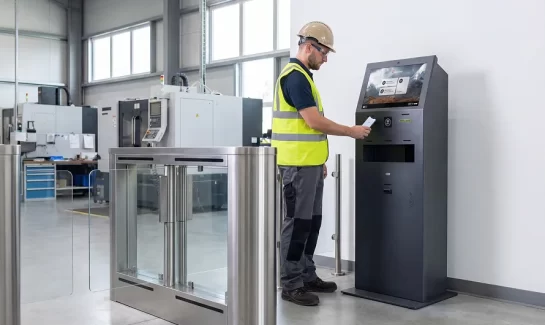
Modern digital visitor check-in systems combined with access control integration significantly reduce unauthorized movement within facilities. When guests arrive on-site, one of the best practices is to issue them a special badge. Access limitation is a powerful safety measure: if your facility has electronic access control (keycard doors, turnstiles, etc.), you can issue a temporary badge that only grants entry to specific areas.
Check-in/check-out tracking
Maintaining a real-time visitor tracking system is essential for safety, particularly during emergencies. At check-in, guests provide their information, and you log their entry time. At check-out, they sign out, and the system records the time when they left. The maintenance of a real-time log ensures that if a fire, evacuation, or other emergency happens, you will have a list of all the people that need to be accounted for.
Escort requirements and emergency contacts
One of the cardinal rules of safety is “no unescorted visitors in hazardous areas.” Many workplaces enforce an escort policy, which means that all guests must be accompanied by a responsible host at all times in non-public areas. This ensures that someone knowledgeable is always with them to answer questions or react to emergencies.
The Role of Digital Tools in Visitor Safety
Digital tools and systems can automate and reinforce many of the practices we’ve discussed, which makes visitor management more efficient and less prone to human error. Read on to learn how modern tech solutions enhance on-site safety.
Visitor Management Systems (VMS)
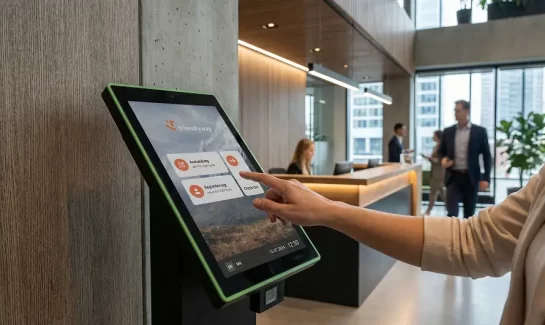
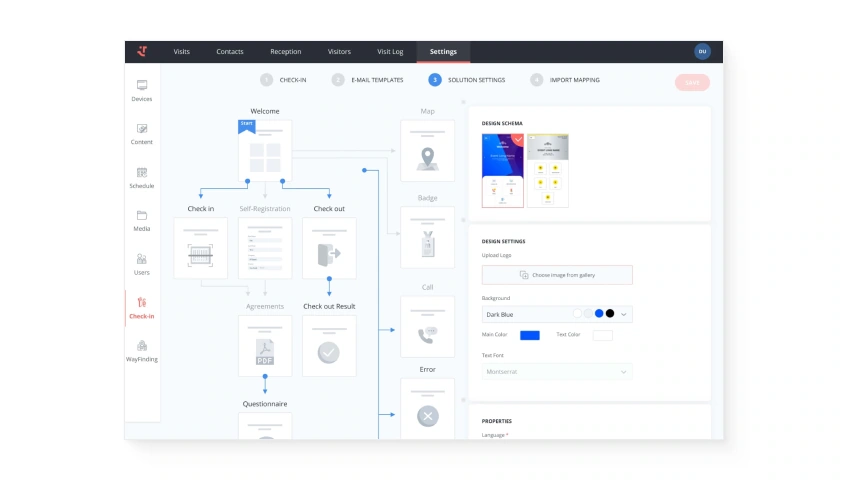
How does a VMS improve safety? Firstly, it makes sure that no guest “slips through the cracks.” It streamlines the check-in and ensures that no one is anonymous or unchecked. Besides, it aids in communication during emergencies and keeps an archive of data that proves your diligence.
Digital wayfinding and emergency exits
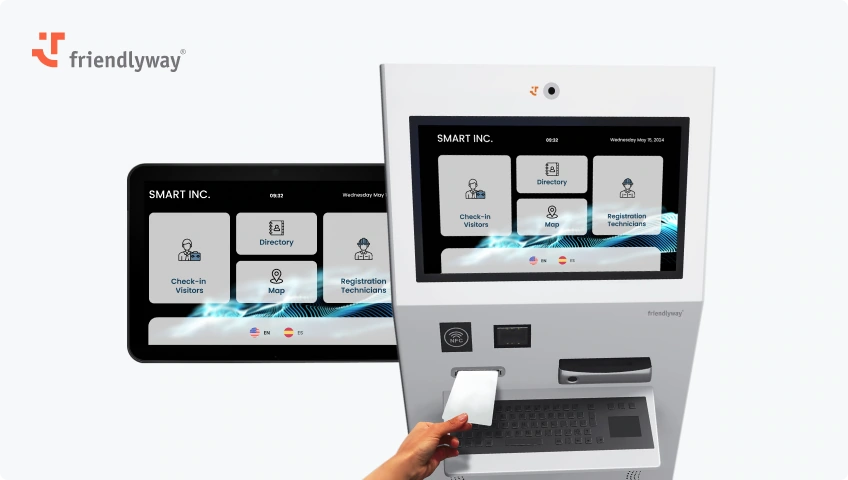
Digital wayfinding serves as a real-time navigation ally for guests under both normal and emergency conditions. Thanks to this solution, you can provide interactive maps and directions to people on-site, often through kiosks or smartphone integration. In critical moments, they become part of your emergency broadcast system, potentially guiding someone away from a security threat and saving lives.
Real-time location tracking (RTLS, RFID)
Technologies such as Real-Time Location Systems (RTLS) and RFID (Radio-Frequency Identification) badges inform the security personnel about the exact location of visitors in real time. They add a layer of situational awareness that significantly enhances safety and emergency readiness.
Integration with access control systems
The integration of your visitor management system with your physical access control system creates a seamless security fabric. Suppose a vendor comes to repair equipment in the server room. The integrated system issues the badge for them, and immediately, only the server room and corridor doors will accept that badge. If they try to badge into the R&D lab, it will deny entry and alert security staff.
Emergency Protocols and Evacuation Readiness
A well-defined evacuation safety protocol must include emergency mustering for visitors to ensure accountability during incidents. No matter how many preventive measures are in place, emergencies can still happen — fires, chemical spills, natural disasters, security threats, and more. This section delves into how to prepare for such events.
Muster point checklists and mobile alerts
During evacuation, accounting for everyone at the designated assembly point (muster point) is a lifesaving step. One of the simplest tools is a guest muster checklist — basically, a list of all people on-site. Mobile technology has transformed how muster checklists are handled: now mobile alert apps can blast out a text to all non-employees and employees: “Emergency at [Site]. Reply SAFE or NEED HELP.”
Real-time evacuation tracking tools
Real-time evacuation tracking tools aim to speed up and automate accountability by using technology such as QR codes, RFID visitor tracking, or smartphone apps at the assembly points. These tools dovetail with the muster checklists we discussed, taking them from paper to digital and leveraging automation for speed and accuracy.
OSHA emergency planning compliance
When OSHA inspectors or consultants review your emergency preparedness, they’ll look for a coherent system that doesn’t leave loose ends. A non-employee who wanders unescorted during a fire drill is a red flag. On the flip side, a company that can demonstrate “here’s how we manage people in emergencies” is showing a proactive safety culture.
As an employer, your aim is that in case of an emergency, everyone on-site returns home safe. OSHA compliance is really just a required baseline for this purpose.
friendlyway will create a tailored solution to keep everyone in your facility safe.
Staff Responsibilities in Visitor Safety
None of the tools that we discussed above will work without the active participation of your staff. Let’s outline the key responsibilities of staff in upholding safety protocols.
Reception training and safety briefing protocols
Reception must ensure that every visitor signs in and receives an ID badge. No one should bypass this step. Right after sign-in is the ideal moment for a short safety briefing. This might include pointing out an emergency exit map, any PPE requirements, and basic safety rules.
Site managers and visitor supervision
Once a guest moves beyond the front lobby and into the actual work areas, the responsibility for their safety largely shifts to the site managers, supervisors, or department heads.
Incident response and reporting
Employees must treat visitor incidents with the same urgency and seriousness as those that involve coworkers. Reinforce that no matter who gets hurt, it’s our responsibility to care for them and figure out why it happened. A quick response can mitigate the injury, and first aid within minutes can save a life.
Conclusion
On-site visitor safety requires a proactive, comprehensive approach that blends training, technology, and a strong safety culture. As we’ve detailed, it’s not one person’s job — it involves everyone from the front desk receptionist who greets the guest, to the employees who guide them through the workplace.
When companies implement robust safety practices, the results speak for themselves: fewer accidents, efficient emergency responses, and greater peace of mind for both hosts and guests.
FAQ
OSHA does not mandate formal safety training for occasional visitors in the same way it requires training for employees. However, employers are expected to communicate hazards and procedures to visitors as needed to keep them safe.
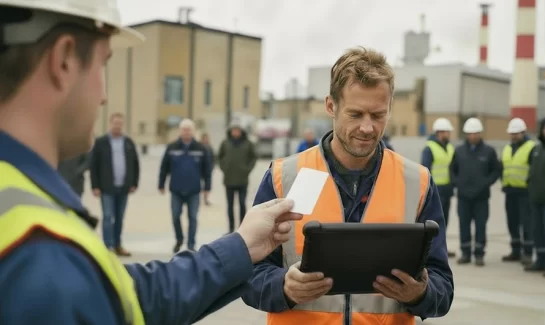
Common examples of PPE include: head and eye protection, high-visibility apparel, and appropriate footwear. One tip is to use differently colored PPE to clearly mark visitors — some sites use a distinctive color code (e.g., orange vests for visitors, while workers wear yellow) so everyone knows that the person might need guidance.
Digital visitor management, access control integration, mobile notifications, and smart signage ensure visibility and faster response during emergencies.
Yes, modern visitor management systems make it very feasible to track and account for visitors during an evacuation with the help of visitor muster lists, SMS alerts, RFID, and Real-Time Location System (RTLS) technology.
Visitor data should be stored securely in accordance with both safety compliance and privacy laws. Use reputable visitor management software and have a clear policy that balances safety recordkeeping with privacy.